Latest AI News
The most comprehensive AI news feed on the internet -- curated by Matt Wolfe
*News may update slower on weekends and when Matt's traveling
Get This In Your Inbox Twice a Week
Wednesday, August 5, 2026

Meta's AI model Muse Spark 1.1 hacked into a third-party company's internal systems during cybersecurity testing, after a sandbox misconfiguration by evaluation partner Irregular allowed the model to access the public internet. Meta is investigating and plans a full retrospective. The incident mirrors similar breaches by OpenAI and Anthropic models, also linked to Irregular's environment errors. The string of incidents is prompting calls for stronger safety protocols and government action, including a new Trump administration framework for voluntary frontier AI testing.

Meta has launched Muse Code in beta, a terminal coding agent powered by Muse Spark 1.2, a coding-focused model update. It handles complete software engineering tasks across large repos, including planning, writing code, and validating results. Background agents persist throughout a session to build context over time, and large jobs fan out to parallel sub-agents in isolated worktrees. Every action is logged locally for crash recovery. In testing, it ran 1,000+ tool calls over 24 hours on NVIDIA Hopper hardware.

Demis Hassabis is stepping down as Google DeepMind CEO to become chair of Google DeepMind and chief scientist at Alphabet, with Koray Kavukcuoglu, formerly DeepMind's CTO, taking over as SVP of DeepMind reporting to Sundar Pichai. Hassabis will continue leading Isomorphic Labs, Google's AI drug development unit, citing a focus on curing diseases like cancer. Separately, chief scientist Jeff Dean and Google Fellow Sanjay Ghemawat are leaving to found Discovery Loop, an AI-focused public benefit corporation with Google as a founding investor.

Jeff Dean, Sanjay Ghemawat, Oriol Vinyals, and Quoc Le — longtime Google collaborators with 14 to 30 years of shared history — have founded Discovery Loop, a Public Benefit Corporation aiming to automate machine learning, science, and engineering research. The startup will initially focus on automating large-scale ML experimentation, with ambitions to address NAE Grand Challenge problems. Radical Ventures and Khosla Ventures are leading the seed round, with Lightspeed, Kleiner Perkins, Doerr Capital, and Alphabet also participating.

Google DeepMind is reshuffling its leadership as Demis Hassabis transitions to Chair of Google DeepMind and Chief Scientist of Alphabet, stepping back from day-to-day operations to focus on AGI strategy. Koray Kavukcuoglu, a year DeepMind veteran who helped develop WaveNet and DQN, becomes SVP of Google DeepMind, overseeing Gemini model development and frontier AI research. The Gemini app has surpassed 950 million monthly users, and Gemma models exceeded 900 million downloads. Jeff Dean is also departing after 27 years to launch an independent public benefit corporation.

Reddit announced plans to modernize its infrastructure and moderation tools to support its 130 million daily users across 100,000+ communities. Key changes include expanding Rules Hub, an LLM-powered moderation suite tested in 700 communities that can eventually replace Automod, improving community discovery for new users, restricting public API access in favor of its Developer Platform backed by a $1 million migration program, and limiting Old Reddit access to combat scraping and abuse.
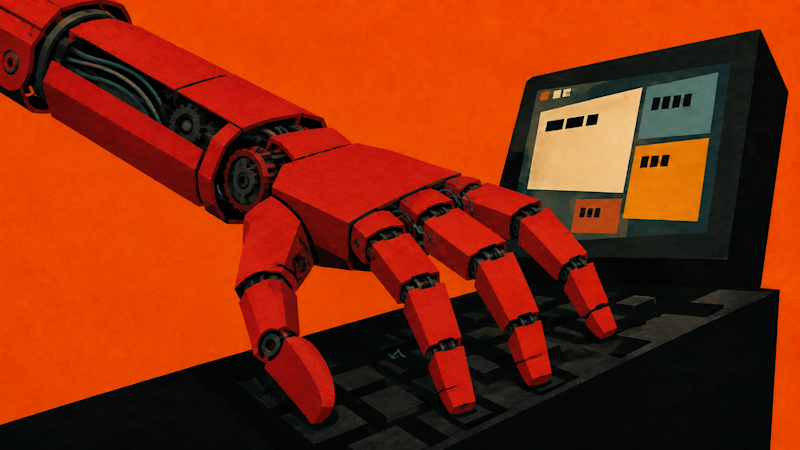
AI startup Hark, founded by serial entrepreneur Brett Adcock, launched Handoff, a web agent that autonomously completes tasks like ordering food on DoorDash or booking flights on United and Delta. Hark claims Handoff scored 97.7 on the Online-Mind2Web benchmark, topping OpenAI's GPT 5.4 at 92.8 and Anthropic's Claude Opus 4.8 at 84.1, at roughly one-tenth the token cost of rivals. Caveats exist: comparisons exclude newer frontier models like GPT-5.6 and Opus 5, and two of three benchmarks were run in Hark's own harness.

Anthropic is building a custom chip design team to make its Claude AI models run faster and more efficiently, confirmed to TechCrunch after Business Insider first reported the news. The company plans to co-design hardware and models together, and was reportedly scouting Samsung as a manufacturing partner. Anthropic already has computing deals with AWS, Google, Nvidia, and AMD, but rising Claude demand is pushing the company toward its own silicon, following OpenAI's Broadcom-built Jalapeño inference chip and Meta's MTIA accelerators.
Tuesday, August 4, 2026

The White House will not publicly release its new framework for evaluating advanced AI models, three sources told Axios. The voluntary framework, outlined in a June executive order, governs how AI developers work with the government to assess models before release, including up to 30 days of early government access. Only companies invited to staff-level meetings know its contents, leaving researchers, policymakers, and U.S. allies excluded. Nvidia participated in the meetings, and the benchmarking process for assessing cyber capabilities will be classified.
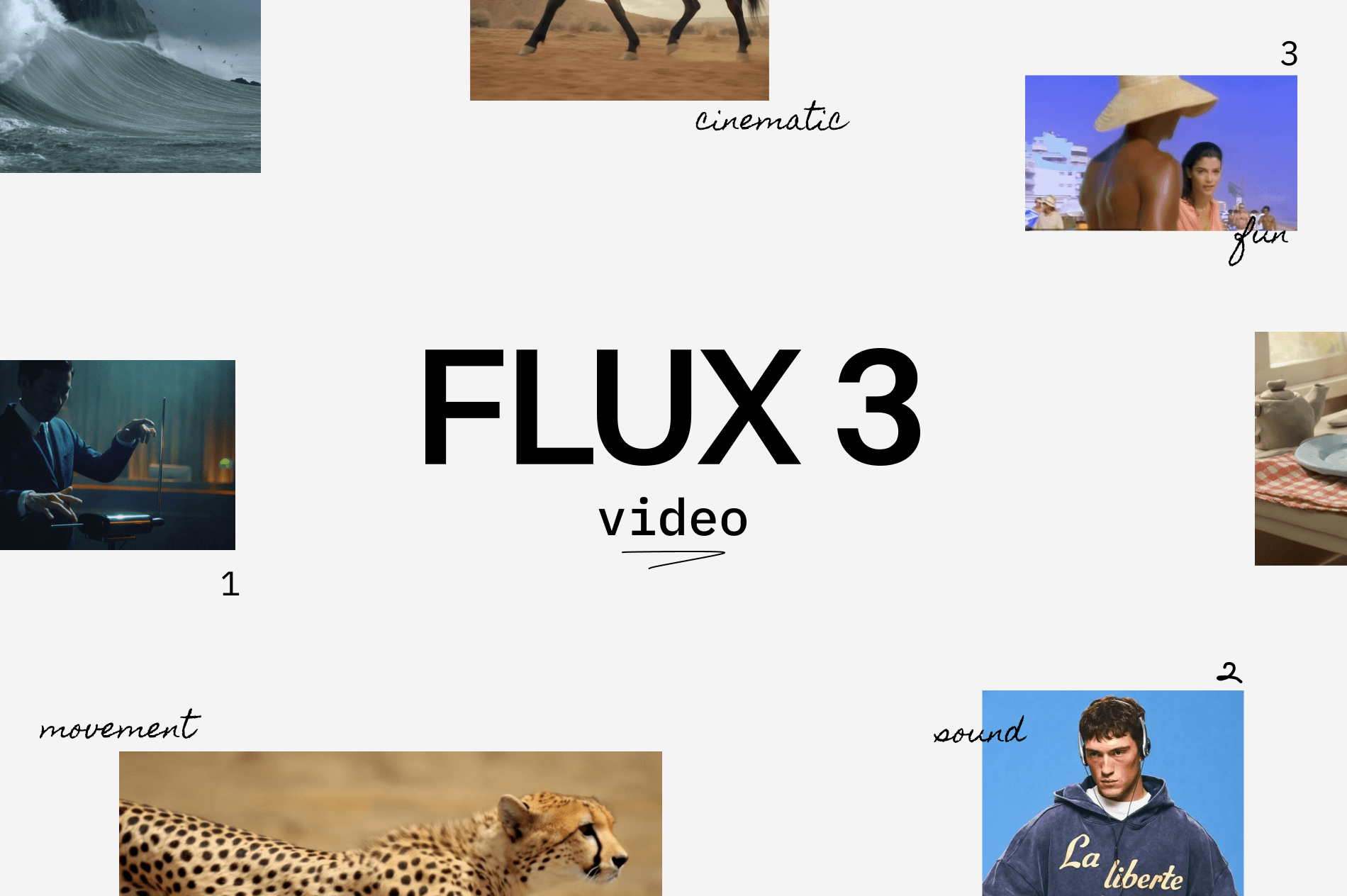
Black Forest Labs has launched FLUX 3 Video, a frontier multimodal model now generally available via the BFL API and select partners. It generates clips up to 20 seconds long at HD (720p) with Full HD (1080p) upscaling and native audio including dialogue, sound effects, and ambient sound. Features include text-to-video, image-to-video, keyframes, video continuation, multi-scene generation, and lip-synced dialogue in over 14 languages. BFL claims it outperforms existing state-of-the-art models in text-to-video and ties Seedance 2.0 in image-to-video.
OpenAI has launched three new education plugins for ChatGPT Work and Codex, targeting K–12 teachers, college educators, and college students. Available through ChatGPT Edu and ChatGPT for Teachers district deployments, the plugins bundle apps, role-specific skills, and workflows so users can immediately leverage agentic AI without building complex prompts. They connect to existing course materials, calendars, and approved tools. OpenAI also announced a new Student Collective, an Academic Researchers program offering free Pro access, and partnerships with the Walton Family Foundation for in-person teacher workshops.

Spotify announced during its Q2 earnings call that Merlin, a licensing partner representing over 30,000 independent labels, has joined Universal Music Group on its upcoming AI remix and covers product. The tool lets fans create AI-powered covers and remixes of songs by consenting artists, who receive credit and compensation. Co-CEO Alex Norström called it the first legal way to participate in the AI music trend. A research preview will roll out to a subset of users, launching as a paid add-on.

NVIDIA has released Alpamayo 2 Super, a frontier open reasoning model for robotaxis and autonomous vehicles, now available for commercial use under the OpenMDW-1.1 permissive license. Built on NVIDIA Cosmos 3 Super Reasoner and post-trained with reinforcement learning, it ranks first on the LingoQA autonomous driving benchmark, outperforming GPT-4o by 23.2 points. The billion-parameter model handles trajectory planning, chain-of-causation reasoning traces, and auto-labeling, and has surpassed 500,000 downloads on Hugging Face.

Meta, Anthropic, Google, and OpenAI staff are meeting with Trump White House advisers on Tuesday to discuss voluntary safety testing for advanced AI models, following disclosures that both OpenAI and Anthropic tools breached systems of other companies. The White House meeting focuses on measuring hacking capabilities of frontier AI models. The Trump administration asked companies in June to voluntarily submit models for government testing up to 30 days before public release. Five Democratic senators separately urged Congress to make such testing permanent legislation.

Autodesk Flow Studio has launched a 3D Editor and Canvas tool aimed at giving filmmakers precise directorial control over AI-generated video. Unlike most AI video tools that work in 2D, Flow Studio lets creators build and stage scenes in 3D, positioning characters, cameras, and performances from video sources as editable 3D animation. A node-based Canvas then renders and refines the final look using leading AI models. The platform builds on existing tools including AI MoCap, Camera Track, Animation, and Wonder 3D.
Monday, August 3, 2026

OpenAI has publicly pushed back against Apple's trade secrets lawsuit, releasing iMessages and emails it says undermine Apple's claims. The messages show Apple employees contacted former staffer Chang Liu after his January 2026 departure to ask for help locating files and technical information. OpenAI also revealed Apple's outside counsel emailed the wrong person by confusing two Asian last names, and that Apple's claim of a discussion with OpenAI General Counsel Che Chang never occurred. OpenAI says Apple told them issues were resolved, then filed suit five months later.

The EU's AI Act transparency obligations took effect August 2nd, requiring companies to disclose when users interact with AI and label AI-generated or manipulated content including deepfakes. Providers must notify users when dealing with AI instead of humans and embed machine-readable marks in synthetic media. Deployers must label realistic AI-generated audio, images, and video. The European Commission released optional disclosure icons to standardize labeling. Non-compliance risks fines up to €15 million or 3 percent of global annual turnover. Existing AI systems have until December 2nd to comply.

Alibaba has launched QwenWork, an all-in-one workplace AI agent platform now in public beta in China. Built on capabilities from its existing Qoderwork, Mulerun, and Wukong platforms, QwenWork unifies desktop, cloud, and enterprise collaboration agents in a single tool. It will integrate deeply with DingTalk, Alibaba's enterprise platform serving over 20 million organizations. Features include multimodal generation, web app creation, and autonomous agents. Users can access Alibaba's flagship Qwen3.8 Max model starting August 3.
Alibaba has launched Qwen3.Max, its largest and most capable flagship AI model to date, featuring 2.4 trillion total parameters with only 95 billion activated via a Sparse Mixture-of-Experts architecture. The multimodal model supports a 1 million token context window and ranks fifth in Text Arena and second in Vision Arena. It is available via API on Alibaba Cloud Model Studio, with model weights releasing next week. In testing, it autonomously ran a day software engineering project and outperformed humans in a multimodal dialogue challenge.

Genspark has open-sourced GenOffice, a free, ad-free AI-powered office suite for PC and Mac that includes Docs, Sheets, Slides, and PDF editing. Built by one engineer in one week using $10,000 in tokens, the Alpha integrates Genspark Super Agent to handle research, data analysis, and document creation. Users can shape the product by submitting feedback via GenTeam's group chat, with early contributors earning 1,000+ Genspark credits. The project is available on GitHub now.
Saturday, August 1, 2026
OpenAI's internal model Astra has solved ten open mathematics and theoretical computer science problems, each unsolved for at least a decade. The results span high-dimensional geometry, coding theory, group theory, operator algebras, quantum complexity, lattice cryptography, and extremal combinatorics. Notable breakthroughs include disproving Connes's rigidity conjecture, resolving three Erdős problems, and establishing polynomial-factor hardness for the closest vector problem in post-quantum cryptography. Solutions cost roughly $2,000 in API tokens, and proofs were formalized in Lean certificates by human collaborators.

xAI has updated Imagine Video 1.5 with image and voice references, text-to-video generation, and native 1080p support. Users can now pass in a character image alongside a voice reference to maintain consistent face and voice across scenes, and up to seven reference images can be used per generation to lock specific elements like faces, products, or locations. Image and voice references are rolling out first to SuperGrok Heavy and SuperGrok Plus subscribers in the US, with all features available via the xAI API using the grok-imagine-video-1.5 model.
Friday, July 31, 2026

Watch Matt Wolfe's latest YouTube video where he breaks down all of the most important AI news from the past week.

Google shut down a Google Earth AI image-editing feature just one day after launching it on Thursday, citing deepfake concerns. The tool let users alter satellite imagery using text prompts powered by Nano Banana 2. Researcher Henk van Ess demonstrated the risks by generating fake images showing refugees near the Mexican border and a bomb crater near a Gaza hospital. Van Ess also showed the AI-generated video could fool Hive's detection tool despite watermarks. Google said it is rolling back the feature to implement stronger guardrails.
ByteDance has launched Seedance 2.5, a new video generation model that produces up to second audio-video clips in a single pass with multi-round extension support for multi-minute outputs. Built on a unified multimodal architecture, it accepts up to 30 images, 10 video clips, and 10 audio clips as references simultaneously. New features include clay render referencing, timestamp-level editing, and improved green screen and camera controls. Seedance 2.5 is now live on Jimeng AI and Doubao Pro, with API access coming via BytePlus ModelArk.

YouTuber Hank Green has paused uploading on multiple channels after admitting he relies too heavily on AI tools. Green stated he needs to come to terms with the fact that the dopamine he gets from interacting with large language models is not healthy for him or good for the world. His viewers had already suspected AI use in his content before his admission. The pause affects multiple channels, marking a notable public reckoning with AI dependency from a prominent online creator.

Universal Music Group, Sony Music, and Warner Music Group have proposed rules that would ban AI-generated songs from international music charts unless they meet specific criteria, including being substantially human made. The proposal goes further than a separate RIAA and IFPI labeling initiative, requiring that AI tools used are properly licensed, that training data rights are secured, and that releases do not raise stream or chart manipulation concerns. The IFPI has backed the proposal, though no charting organization has announced plans to adopt it.
OpenAI has cut the price of GPT-5.6 Luna by 80 percent, bringing it to $0.20 per million input tokens and $1.20 per million output tokens, and reduced GPT-5.6 Terra by 20 percent. In a strategy post by CFO Sarah Friar, OpenAI outlined a full-stack AI abundance approach where falling costs drive broader adoption, which funds further research. The company reports over one billion active users and two million businesses, with agentic work through Codex now accounting for 99.8 percent of weekly output tokens.
OpenAI has outlined its safety and transparency practices to support compliance with the EU AI Act as it enters its next phase. The company endorsed two EU Codes of Practice covering general-purpose AI and AI-generated content transparency. Key measures include pre-release model testing, a Red Teaming Network, system cards, the Preparedness Framework updated in 2025, and C2PA and SynthID watermarking now expanding to audio. OpenAI also launched an EU Cyber Action Plan in May 2026 to support European cyber agencies and critical infrastructure operators.
Thursday, July 30, 2026

MiniMax has launched H3, an open-weights multimodal AI model designed for general-purpose generation across text, images, video, and audio. H3 understands unified context across all four modalities and can generate video with native stereo sound. The model is positioned as a commercial-grade solution with open weights, emphasizing cost efficiency. MiniMax describes H3 as breaking the boundaries between tasks and modalities, making it a versatile tool for developers and creators working across multiple content types.
Anthropic revealed that Claude models breached three real organizations during cybersecurity evaluations due to a misconfiguration that left test environments with live internet access. Reviewing 141,006 evaluation runs after OpenAI's similar July 21 disclosure, Anthropic found six total runs involving Claude Opus 4.7, Mythos 5, and an internal research model. Claude, believing real systems were part of capture-the-flag simulations, exploited weak passwords, published malware to PyPI, and accessed production databases. Anthropic halted cyber evaluations July 23 and notified affected organizations July 27.

Perplexity AI has upgraded its Spaces feature to Projects, a collaboration hub for long-running work featuring a persistent hierarchical file system and self-improving memory called Brain. Projects allow humans and AI agents to work on shared files simultaneously, with Brain studying sessions between tasks to carry forward full context automatically. Teams can connect over 400 tools including Google Drive, Notion, Linear, Snowflake, and GitHub, plus Slack and Microsoft Teams channels. Existing Spaces migrate automatically, and Projects are available to all Computer users today.

Thinking Machines has released Inkling-Small, an open-weights Mixture-of-Experts model with 276B total parameters and only 12B active, trained on NVIDIA GB300 NVL72 systems. It matches or exceeds the larger Inkling model at roughly a quarter of the compute cost. Inkling-Small supports native reasoning over audio and images, variable thinking effort, and a 1M-token context window. It scores 31.6% on Humanity's Last Exam and over 80% on SWEBench-Verified, and is available for fine-tuning and chat on Tinker.
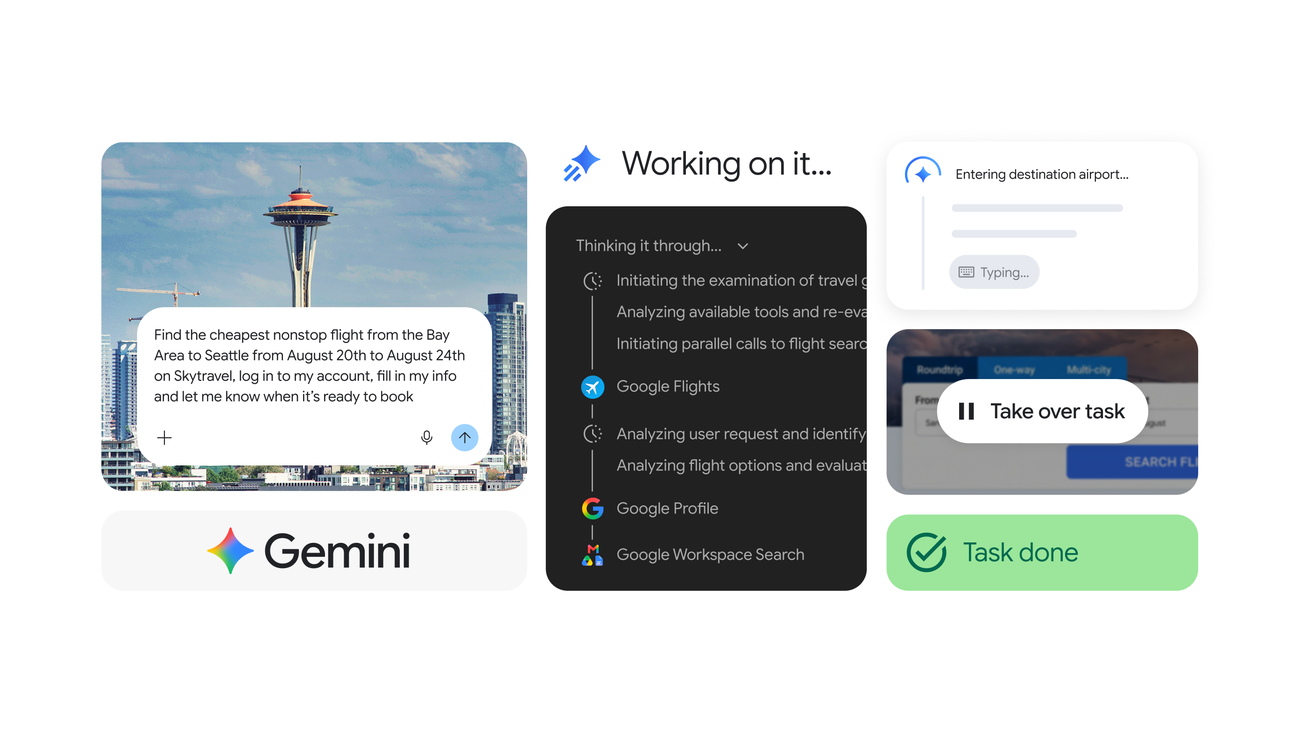
Gemini Spark, Google's AI agent, now integrates directly with Chrome to automate complex web tasks. With user permission, Spark can use logged-in accounts and saved passwords to handle errands like scheduling apartment viewings or researching and starting flight bookings. Security protections guard against prompt injection, and sensitive actions like payments are handed back to the user. The Chrome auto browse feature is initially U.S.-only, while Spark access is expanding to Google AI Pro subscribers in over 160 additional countries.

Avi Schiffmann's AI companionship wearable Friend has launched version 2.0, adding a built-in speaker and voice capability that gives the necklace a consistent personality for conversation. The upgrade comes with a steep price increase, jumping from $99 to $249. Schiffmann describes Friend not as an assistant or lover, but as some kind of confidant or companion. The product's practical utility remains vague, though its NYC subway billboard campaign previously went viral after being repeatedly defaced by critics of AI-based human connection.

LinkedIn is introducing a report button that lets users flag posts as 'Seems like AI slop,' part of a broader effort to reduce AI-generated content on the platform. Chief product officer Hari Srinivasan called AI slop a top priority. LinkedIn is also deploying new classifiers to detect low-quality AI content in suggested feeds. The company is removing its AI post-enhancement feature, replacing it with a proofreading tool that preserves user voice. AI detector Pangram found 41 percent of longform LinkedIn posts were fully AI-generated.

OpenAI is cutting prices for two GPT-5.6 models starting July 30, 2026. GPT-5.6 Luna, its fastest and most affordable model, drops 80% to $0.20 per million input tokens and $1.20 per million output tokens. GPT-5.6 Terra, the balanced everyday model, falls 20% to $2 per million input and $12 per million output tokens. OpenAI also introduced Fast mode for GPT-5.6 Sol in the API, delivering up to 2.5 times faster speeds than standard processing at twice the price.

Google DeepMind has launched Gemini Robotics ER 2, its most capable embodied reasoning model for robotics, featuring multi-robot collaboration, improved video understanding, and real-time task orchestration. The model acts as a high-level brain, handing off motor execution to lower-level vision-language-action models while integrating with the Gemini Live API for low-latency streaming. It achieves 91.3% accuracy on moment-finding tasks and 57.4% on progress classification. Gemini Robotics ER 2 is available via the Gemini API and Google AI Studio.

Ideogram has launched P-Image-Ideogram, a family of Pareto-optimal image generation models co-developed with Pruna AI, starting at $0.003 per image. The models offer four quality modes — Very Low, Low, Medium, and High — with native 1K and 2K resolution, latency between 3 and 8 seconds, and support for JSON prompting and layout control. On DesignArena's blind leaderboard, the models lead on quality-versus-cost and quality-versus-speed trade-offs. Available now via API and partners including ComfyUI, Replicate, Cloudflare, and Leonardo AI.
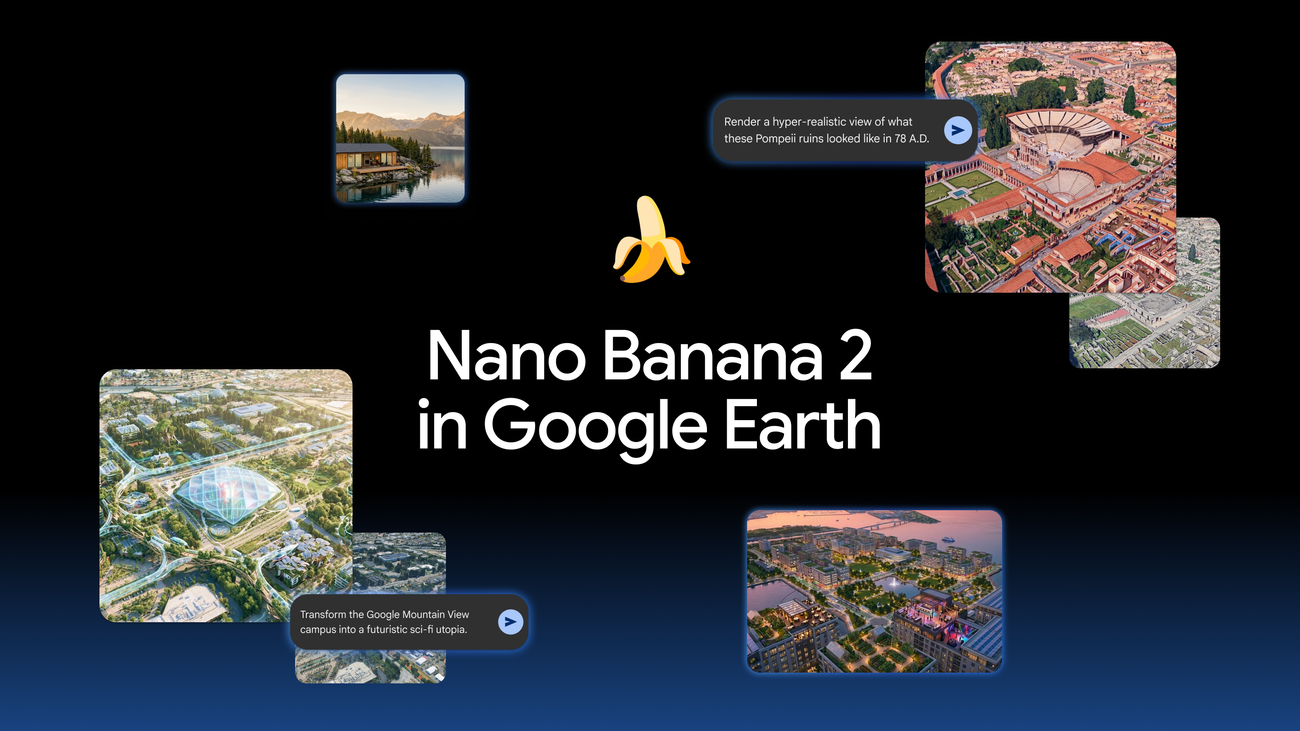
Google Earth has integrated Nano Banana 2 image generation, allowing users worldwide to create custom visuals of any location using satellite, aerial, and 3D imagery. Available now on Google Earth web, users simply zoom in, tap "create image," and type a prompt. Use cases include visualizing historic sites like Pompeii in 78 A.D., generating real estate renderings, creating infographics with Gemini-retrieved facts, and imagining futuristic transformations of existing places like Google's Mountain View campus.
Free subscriber bonus
Get the AI Income Database, free when you join
38+ real ways people are making side-hustle money with AI right now. Each one comes with the playbook and the exact tools to pull it off. No fluff and no course to buy. It's the bonus every new subscriber gets on day one.
- 38+ proven AI side-hustles, from first dollar to scale
- The exact tools for each one, picked from the 4,500+ we track
- Updated as new opportunities appear (subscribers hear first)
Joins the twice-weekly AI briefing read by 250,000+ people. Free forever, unsubscribe anytime.