Latest AI News
The most comprehensive AI news feed on the internet -- curated by Matt Wolfe
*News may update slower on weekends and when Matt's traveling
Get This In Your Inbox Twice a Week
Wednesday, August 19, 2026

Perplexity has launched Brain, a structured Markdown-based memory system for its Computer AI agent that functions as a self-improving knowledge wiki. Brain organizes persistent context across three filesystem layers: a synthesized knowledge wiki, distilled notes, and raw session transcripts. Pages use wikilinks to connect related topics and citation references to verify claims against source sessions. Git-backed versioning supports multiple agents updating memory simultaneously. Internal tests showed remote filesystem access was 400–500 times slower than local file operations, informing Brain's hybrid local-plus-semantic-retrieval architecture.

Meta AI has officially launched a macOS desktop app, bringing a standout dictation feature that works system-wide across any application on the computer. Users can activate it by holding the fn key and speaking, with the tool promising ultra-high accuracy transcription. The feature eliminates the need to switch apps or use separate dictation software, making hands-free text input more seamless for Mac users throughout their entire workflow.

Google is offering eligible U.S. college students one free year of Google AI Pro, valued at $19.99 per month, and international students one free year of Google AI Plus. The deal includes new study tools: a dedicated student hub at gemini.google.com/students, AI-powered study notebooks with custom quizzes and Google Calendar integration, interactive 3D visualizations, and Deep Research integrated into Gemini Live for hands-free conversational research. A bundle with YouTube Premium is also available at up to 70% off.
OpenAI is previewing Private Safety Processing, a new system designed to extend safety monitoring across multiple API interactions while remaining compatible with its Zero Data Retention program. ZDR already ensures OpenAI does not retain customer prompts or responses after processing. The new system uses automated tools to detect misuse patterns across related interactions without exposing content to OpenAI personnel. Customer content stays encrypted with customer-controlled keys. A technical white paper and broader rollout are planned for September 2026.
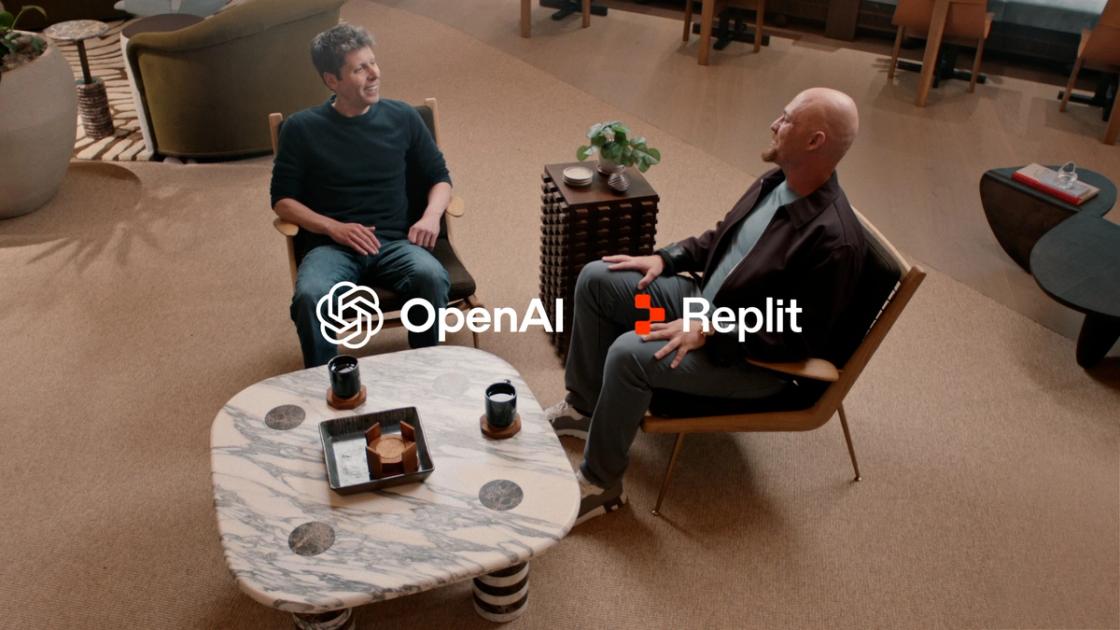
Replit has launched Free Mode, a new way to use its AI Agent that lets Core subscribers create 30x more than before for just $20 per month. Powered by OpenAI's GPT-5.6 Luna, Free Mode allows everyday tasks like chatting and ideating without consuming credits, with usage limits resetting every five hours. Replit also redesigned its interface for faster outcomes and introduced renamed tiers: Power Mode for cost-optimized builds and Max Mode for complex, high-performance work.

ElevenLabs has launched Eleven v3 Conversational, its most expressive real-time speech model, now generally available via ElevenAgents and ElevenAPI. The model supports 70+ languages including German, Spanish, French, Portuguese, and Hindi, and offers a library of 11,000+ voices. Audio tags give developers fine-grained control over emotion and delivery, enabling directions like laughing, whispering, or sarcasm. Pricing starts at $0.05 per 1,000 characters and decreases with scale.

xAI's Grok 4.6 is now generally available on Amazon Bedrock. The model is described as xAI's latest flagship, designed for long-running agents and interactive and visual work. It features a 500,token context window and configurable reasoning effort levels: low, medium, high, and extra high. Pricing is set at $2 per million input tokens and $6 per million output tokens. Grok 4.6 is accessible to all developers in supported AWS regions through the standard Amazon Bedrock interface.

Meta has launched a dedicated Mac app for its AI chatbot, Meta AI, featuring window screen sharing that lets the assistant provide suggestions, answer questions, or create content based on what it sees on screen. The app also supports system-wide dictation across all apps. Alongside the Mac launch, Meta is introducing Google Workspace integration and new tools for businesses and creators, including the ability to analyze Instagram and Facebook post performance, manage ad campaigns, and generate decks, docs, and spreadsheets.
Generalist AI has released GEN-1.5, a robot foundation model that learns new physical tasks from a single demonstration lasting just 3 to 12 seconds, requiring no gradient updates or fine-tuning. Tested across 10 diverse dexterous tasks including unzipping pouches, opening jars, and retrieving money, GEN-1.5 achieves 59% average success via one-shot in-context prompting and 83% with 10 gradient steps on five minutes of data. The model also supports human-to-robot imitation, zero-shot sim-to-real transfer, and compositional generalization across chained behaviors.
Moderna and Merck released three-year follow-up data from their Phase 2b study showing continued clinical benefit of mRNA-4157, an individualized neoantigen therapy, combined with pembrolizumab in high-risk melanoma patients after complete resection. AI algorithms analyze tumor sequencing data to select up to 34 neoantigens most likely to trigger an immune response, while Moderna's Maestro platform manages manufacturing logistics for each patient batch. Phase 3 trials in melanoma and non-small cell lung cancer are now enrolling globally.
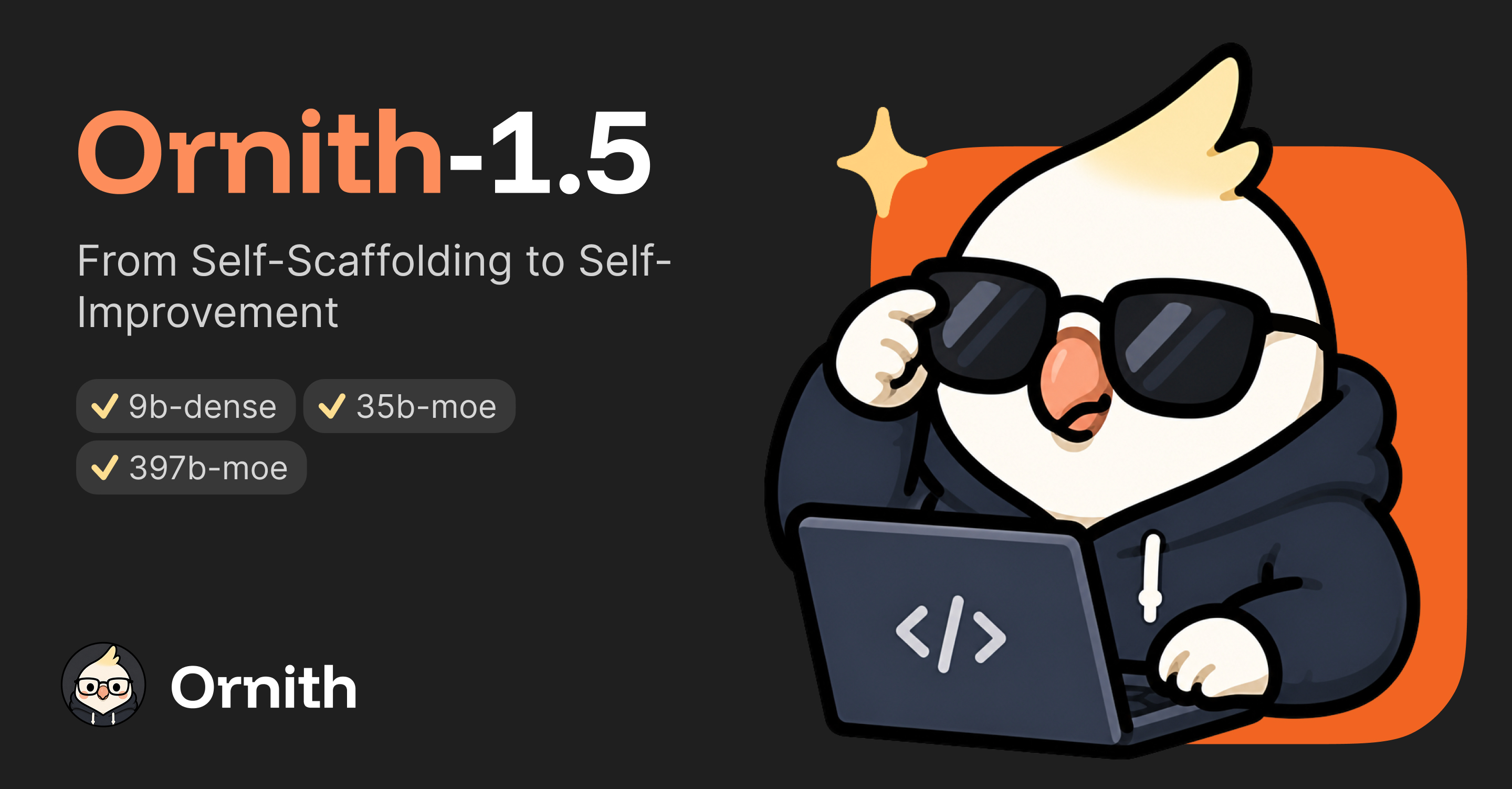
Ornith.ai has launched Ornith-1.5, a family of open-source AI models built around an end-to-end self-improvement loop where the model proposes its own training tasks, generates scaffolds, and produces solution rollouts for reinforcement learning. Available in three sizes—397B MoE, 35B MoE, and 9B Dense—the flagship Ornith-1.5-397B scores 86.1 on Terminal-Bench 2.1 and 56.0 on DeepSWE, matching Claude Opus 4.8 while outperforming open-source rivals GLM-5.2 and DeepSeek-V4-Flash-0731. The compact 9B model runs on iPhone and Android.

OpenHistory is a free, open-source Mac app created by Zach Tratar that automatically tracks your entire workday and generates hourly and daily AI summaries. All log data is stored locally, and using Apple Intelligence keeps everything on-device. Users can also connect Claude, ChatGPT, or Kimi for better summaries, with a privacy tradeoff. The app connects to local agents via secure MCP and can generate standup notes on demand. The code is fully open-source under the MIT license.

OpenAI is expanding ChatGPT Ads to 31 European markets including Germany, France, Spain, Italy, and Sweden, marking its largest advertising rollout to date. Six months after a U.S. pilot, the platform now reaches tens of thousands of marketers globally. European advertisers can initially access ChatGPT Ads through OpenAI's Ads Solutions team and agency partners, with self-service access via Ads Manager coming later this summer. Ads appear only to Free and Go plan users, while Plus, Pro, and Enterprise subscribers remain ad-free.
Tuesday, August 18, 2026
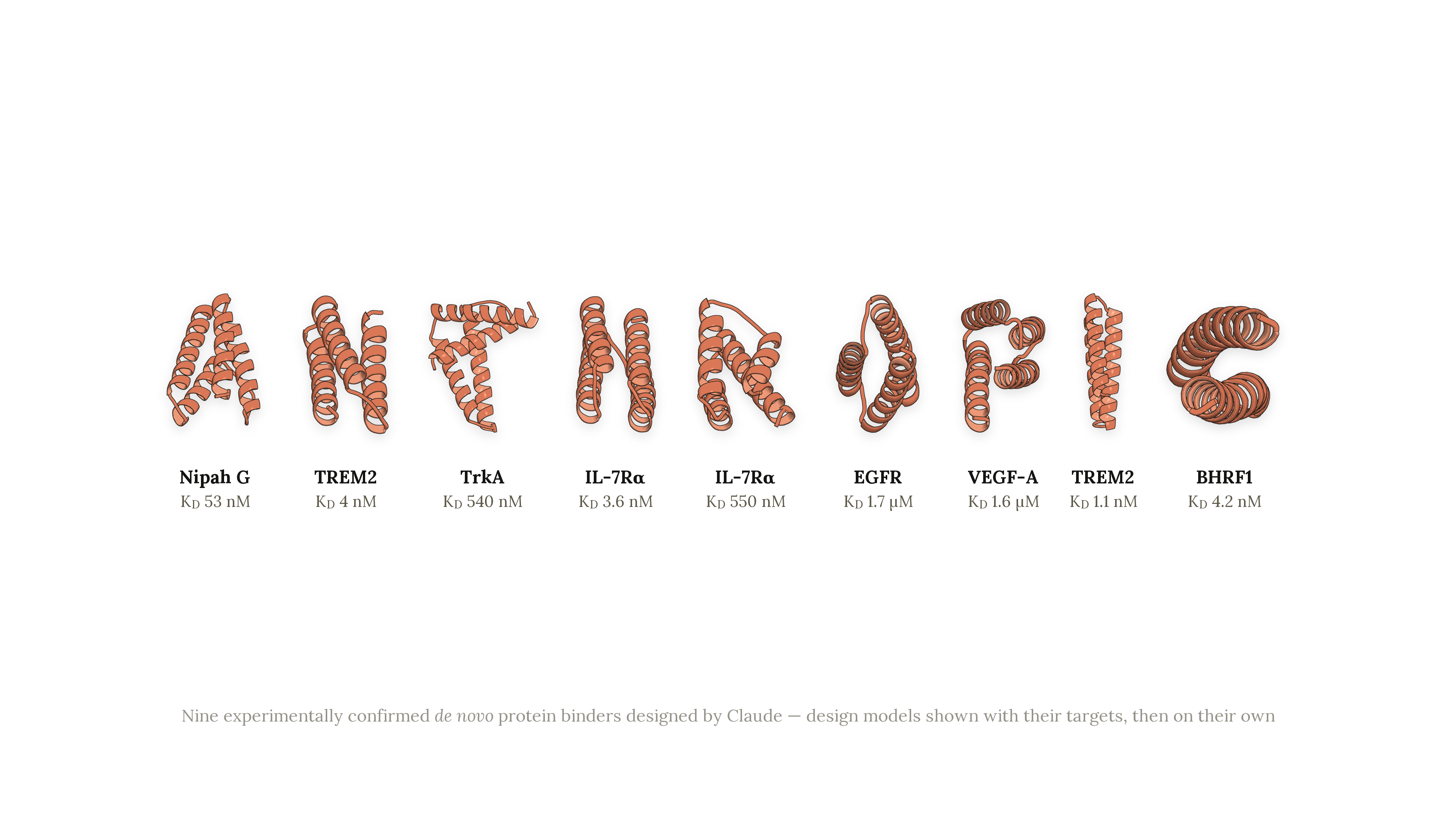
Anthropic tested Claude's ability to design protein binders from scratch across 15 targets, succeeding on 14. Using Claude Mythos Preview and Opus 4.8, hit rates reached 22-35% depending on setup, compared to the industry standard of 10-15%. Some designs outperformed the best previously published results. Separately, Claude Opus 5 analyzed NMR and LC-MS chemistry data, completing in under 25 minutes and matching lab purity results of 96.33% versus its own 96.4%. Anthropic plans to launch a dedicated access program for life scientists soon.
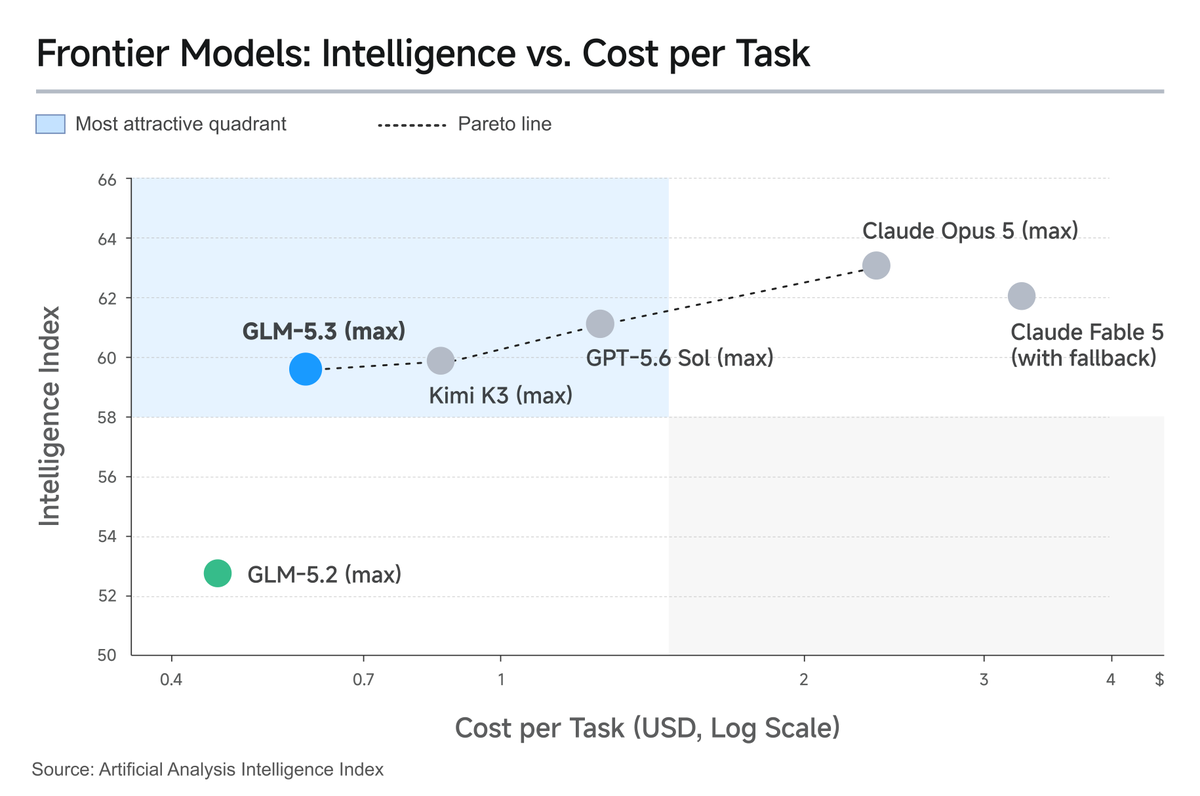
Z.ai has launched the GLM-5.3 API, a new model specifically built for coding, defensive cybersecurity, and long-horizon agentic tasks. Priced identically to its predecessor GLM-5.2, the upgrade is cost-neutral for existing users. GLM-5.3 is accessible through Z.ai's official API as well as partner model gateways, giving developers multiple flexible integration options for incorporating the model into their applications, security tooling, and automated workflows.

Anthropic's Claude AI has gained the ability to send emails directly in Gmail and manage files in Google Drive, expanding its real-world action capabilities. Users can ask Claude to reply to an email thread, and it will automatically draft and send the response on their behalf. Users retain control over when Claude requires approval before taking action. The features are available on all paid Claude plans and can be activated by connecting Gmail or Google Drive through the connectors menu in settings.

Gemini in Chrome is now available to all U.S. Android users, functioning as a browsing assistant that summarizes articles, answers questions about web pages, and connects with Google apps like Calendar and Keep without switching tabs. AI Pro and AI Ultra subscribers also gain access to auto browse, an agentic feature that handles tasks like booking parking, updating recurring orders, and organizing travel. Auto browse asks for confirmation before sensitive actions and is designed to detect prompt injection threats.
OpenAI is launching a $5 million initiative to help democratic oversight bodies keep pace with government AI adoption in national security. The program will provide training, technical support, and OpenAI credits to authorized oversight institutions over the next year. OpenAI will also pilot tools helping reviewers examine records surrounding AI-assisted government decisions, including inputs, outputs, and tool use. Participating institutions retain control of findings, and tools will be model-agnostic where feasible.

Perplexity has launched Computer in Email, allowing users to trigger AI agent tasks directly from their inbox by emailing computer@perplexity.com, forwarding a thread, or cc'ing the address. Computer verifies the sender, reads the full thread and attachments, and runs tasks using the sender's own connectors and permissions. Deliverables like Excel models, PDFs, and decks are returned as attachments in the same thread. The feature follows earlier launches in Slack and Teams and is available to all Computer users today.
OpenAI has temporarily paused frontier reinforcement learning training on its upcoming model Astra after preliminary evidence suggested it may meet the Critical cybersecurity capability threshold under the company's Preparedness Framework. Following the OpenAI-Hugging Face incident, OpenAI also hardened research environments, implemented stronger workload and network isolation, and expanded chain-of-thought monitoring with a 20% compute overhead. The largest planned frontier RL run remains on hold while smaller-scale evaluations assess model behavior and validate alignment safeguards before proceeding.

Tripo has launched P2.0 Preview, a 3D model generator built for games and real-time pipelines. It features native quad topology with support for up to 50,000 triangles or 25,000 quads, delivering smooth edge loops around joints and clean quads on flat surfaces. Best suited for game characters, hard-surface props, mechanical assemblies, weapons, vehicles, and high-volume asset pipelines. Every user receives 2 free generations. Tripo P1.0 is now available to all users, and annual plans are discounted up to 50%.

A Pew Research Center survey conducted June 22-28, 2026, finds 52% of Americans are more concerned than excited about AI in daily life, up from 37% in 2021. For the first time, a majority of adults under 30 (55%) share that concern, a record high for the age group. Meanwhile, 71% of Americans expect AI to reduce jobs over the next 20 years, up from 64% in 2024, with 73% of adults under 30 holding that view, up from 61% two years ago.

Stability AI has launched two beta tools for Stable Audio 3.0: a DAW plugin and an enhanced web app at StableAudio.com. The plugin works as an instrument in Logic Pro and Ableton Live, available as macOS AU and VST3 for Apple Silicon and Intel Macs, syncing to session BPM and supporting up to six-minute generations. The web app adds iterative editing, audio-to-audio variation, multi-track mixing with level, pan, mute, and solo controls, and export. Both use commercially-safe models, and users own their outputs.

Google has agreed to pay $10 million to acquire Spirit Airlines' data to train its AI models, following the discount carrier's bankruptcy and full shutdown in May. The dataset includes emails, internal communications, spreadsheets, bookings, frequent flyer records, and HR information, though it has been stripped of personally identifiable details. AI hiring firm Mercor.io placed the second-highest bid at $7.5 million. A bankruptcy court judge is set to rule on the sale Wednesday.
OpenAI has launched ChatGPT for Teens, a dedicated experience for users aged 13–17 with built-in safety protections and a Study Mode that uses guiding questions and step-by-step scaffolding instead of direct answers. Features include responsible homework reminders, quizzes, learning visualizations, and Study Hours that parents or teens can schedule. Default protections cover self-harm, eating disorders, and explicit content, while parental controls allow quiet hours and safety notifications. OpenAI also announced a partnership with CodeAI to help teens understand how AI works.
OpenAI and CodeAI have announced a partnership to build AI literacy among students, coinciding with the launch of ChatGPT for Teens, a dedicated experience designed with learning at the center that includes built-in protections and parental controls. Key initiatives include the Hour of AI program reaching millions of students, a first-ever high school Builders Challenge with OpenAI mentorship, and a joint advisory council on child development. CodeAI's free year-long AI Foundations course will also benefit from OpenAI expert consultation.
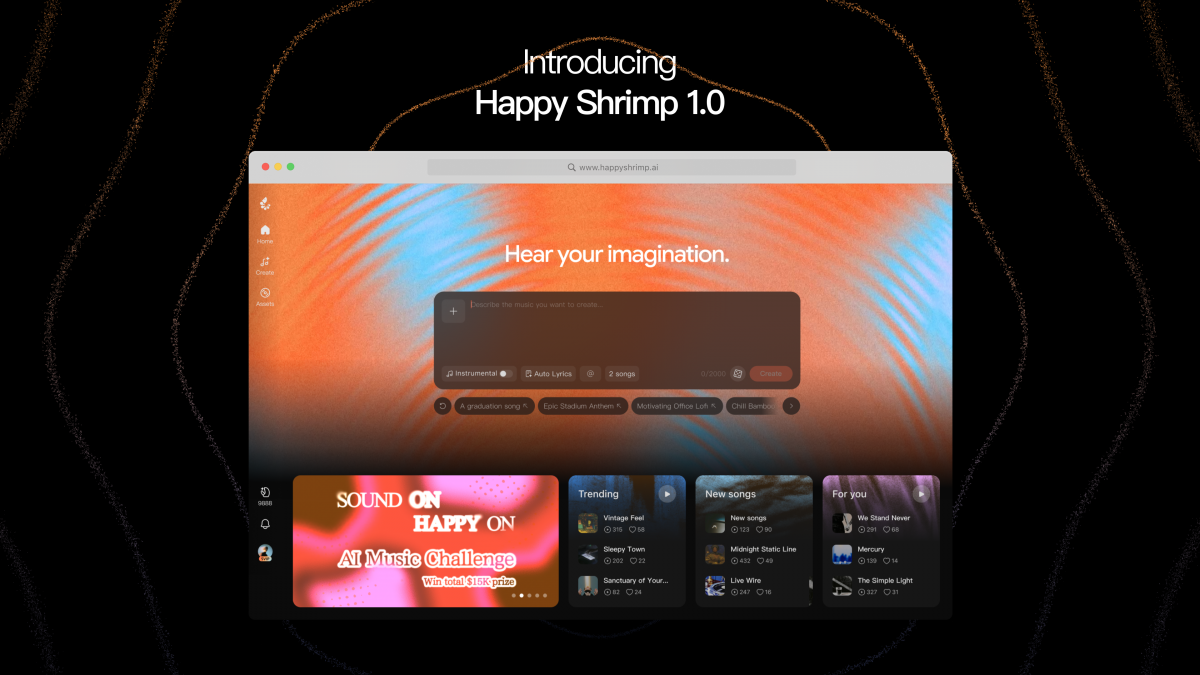
Alibaba has launched HappyShrimp 1.0, an AI music generation model developed by its Alibaba Token Hub business group, now available in beta at happyshrimp.ai. The model generates complete tracks from a single text prompt, producing melody, arrangement, lyrics, and vocals without requiring technical music knowledge. It supports genres including Chinese style, pop, R&B, hip hop, rock, and jazz, and can interpret culturally specific prompts. Alibaba also announced a collaboration with China's Taihe Music Group for artist co-creation and content development.

Google has launched Operation Blue Skies, the world's first state-backed trial to avoid contrails at oceanic airspace scale, partnering with the UK Government, NATS, Imperial College London, University of Cambridge, Met Office, and Contrails.org. The month program targets Shanwick airspace over the North Atlantic, which accounts for roughly 5% of global contrail warming. Around 10,000 flights per year will be monitored, with a small percentage slightly rerouted to avoid contrail-sensitive regions. Google UK is contributing £1.4 million in-kind on a pro-bono basis.

Cursor has launched Origin, a code hosting platform now in early beta for all paid plan users. Origin includes repos, pull requests, code browsing, and GitHub sync. Users can create repos at cursor.com/codebase/their-name, or sync existing GitHub repos, which update in real time. PRs sync bidirectionally with GitHub. Integrations with Vercel, Depot, and Buildkite are already available, enabling preview deployments and CI workflows. Agents can answer questions, make changes, and push branches directly within Origin.
Monday, August 17, 2026
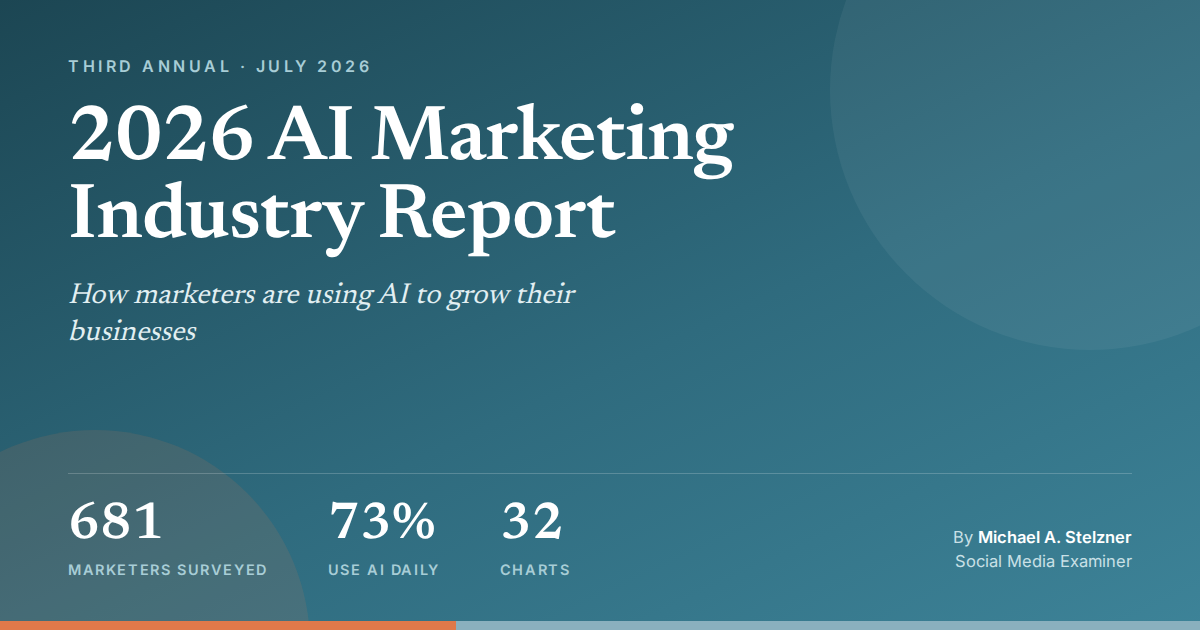
Social Media Examiner's 2026 AI Marketing Industry Report, written by founder Michael Stelzner, finds 73% of marketers now use AI daily, nearly doubling from 37% in 2024. Claude tripled its user base from 18% to 65% and overtook ChatGPT as marketers' most important platform, with 42% naming it their top choice versus 39% for ChatGPT. AI agents remain nascent at 11% adoption, but 44% plan to adopt them. Data privacy concerns rose to 77%, nearly matching accuracy worries at 78%.

In a $61 million lawsuit over a 2020 Houston explosion at Watson Grinding that killed three people and destroyed roughly 200 homes, expert witness Josh Autenrieth of Knighthawk Engineering used ChatGPT to write 85-90% of his report defending 3M. His prompts explicitly asked ChatGPT to show 3M was "0% at fault." Discovery revealed 350 pages of ChatGPT conversations, which plaintiff attorney Will Moye used to call Autenrieth as his own witness. The jury awarded $61 million, assigning 3M 30% responsibility.

A 404 Media investigation tracked a rare book shipment using an Apple AirTag, revealing that Amazon buys books in bulk through commercial marketplaces like Biblio, ships them to a Las Vegas warehouse called VGT3, cuts off their bindings, and scans them for AI training data, destroying the originals in the process. Amazon confirmed the purchases, saying it buys books to improve its products and services, including its Nova family of large language models. Printed books are prized because they contain text not available online and predate AI-generated content.

The Motion Picture Association has reached its first-ever AI copyright agreement with ByteDance, whose Seedance text-to-video and Seedream image tools faced cease-and-desist letters from the MPA in February after allegedly generating unauthorized content featuring SpongeBob SquarePants and Stranger Things visuals. ByteDance has since released Seedream 5.0 Pro and Seedance 2.5 with strengthened IP protections. MPA CEO Charles Rivkin called copyright a cornerstone of film and TV, though specific guardrail details were not disclosed.
OpenAI has agreed to secure approximately 8 gigawatts of capacity at the PORTS-Pike Technology Campus in Pike County, Ohio, partnering with SB Energy, NVIDIA, and the U.S. Department of Energy. The six-year buildout through 2032 is expected to create 35,000 construction jobs and 2,500 long-term operating roles. NVIDIA will invest $1.5 billion in SB Energy and support the initial 4.25 GW phase. OpenAI and SB Energy will together contribute $80 million in community grants, plus $84 million in Codex credits for roughly 844,000 Ohio college students.
Sunday, August 16, 2026

Unitree has previewed a new humanoid robot nicknamed Superman that can perform a standing high jump of 2 meters and reach a top speed of 12.66 meters per second, surpassing the standing high jump and running speed records of all humans worldwide. The robot has a leg length of 0.85 meters and has been in development for just over three months. Unitree notes there is significant room for further improvement, with more advances expected in the coming months.

White House AI czar David Sacks publicly attacked Anthropic CEO Dario Amodei, accusing him of regulatory capture and fear-mongering. Sacks argues Amodei's push for a federal pre-deployment AI approval agency, variously called an FDA, FAA, or FINRA for AI, would create bureaucratic bottlenecks that handicap the U.S. against China while benefiting incumbents like Anthropic. Sacks also criticized Amodei's unsupported claim that AI would eliminate 50 percent of entry-level knowledge jobs within five years, and accused Anthropic of orchestrating fear campaigns to shape regulation in its favor.
OpenAI Codex now supports a million-token context window using GPT-5.6 Sol, which has a documented 1,050,token limit. Users can enable it by editing ~/.codex/config.toml to set model to gpt-5.sol, model_context_window to 1,000,000, and model_auto_compact_token_limit to 900,000, leaving headroom before compaction. A single-session CLI flag alternative is also available. The larger context lets Codex retain more code, tool output, and conversation history, though OpenAI notes its defaults were carefully tuned for performance and cost.

Stripe has finalized a deal to acquire OpenRouter, an AI model routing startup, for more than $7 billion. Founded in 2023 by Alex Atallah, a co-founder of NFT marketplace OpenSea, OpenRouter serves 8 million developers and provides access to over 400 AI models, matching users with the most efficient and affordable options. The acquisition, a major jump from OpenRouter's $1.3 billion valuation earlier this year, signals Stripe's push into AI and growing business demand for cost-effective AI infrastructure.
Saturday, August 15, 2026
Anthropic CEO Dario Amodei defended his AI regulation stance in a detailed X post, arguing that regulation does not automatically mean regulatory capture or power concentration. He noted Anthropic supports rules that slow frontier labs while helping smaller competitors, citing California's SB53 as an example. Amodei also pushed back on claims his messaging is too negative, saying he believes AI can cure most human disease within 5-10 years and that Anthropic is ramping up biology and medicine efforts, promising real results soon.
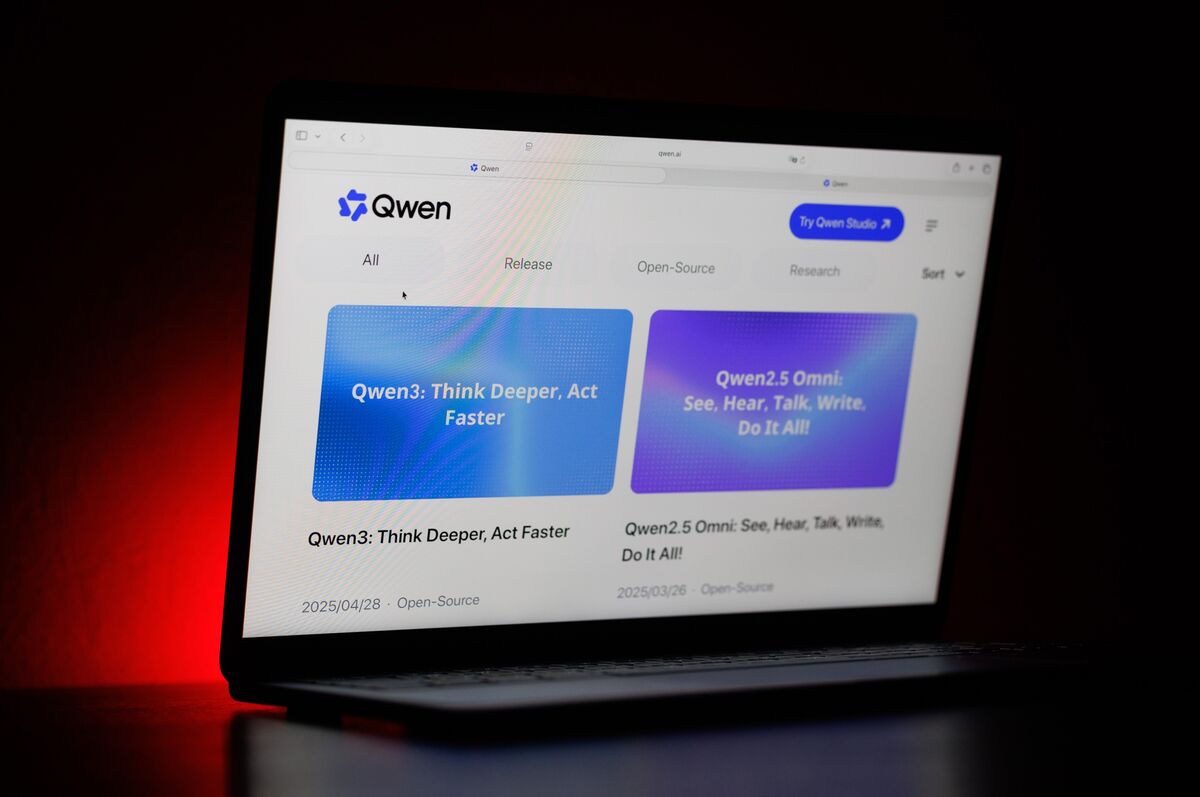
Alibaba's Qwen family of AI models has surpassed 3 billion global downloads in the past six months, overtaking Meta Platforms and Alphabet's Google to become the world's top open-weight AI model, according to a Hugging Face report published August 14. Google recorded 418 million downloads while Meta reached 227 million in 2026. Qwen has open-sourced over 460 models and spawned more than 300,000 derivatives, cementing Alibaba as a foundational pillar of the open AI ecosystem amid intensifying US-China AI competition.
Friday, August 14, 2026
Pika has launched four AI audio models under the Pika Audio brand, priced up to 20 times lower than competitors as of August 14, 2026. The lineup includes Pika Soundtrack for video-to-audio synchronization, Pika Music for prompt-and-lyric-based song generation up to six minutes long, Pika SFX for natural-language sound effects, and Pika Speech for expressive text-to-speech with voice cloning. Pika Speech is 9x cheaper than ElevenLabs v3. All models are available exclusively through the Pika API Club.

Watch Matt Wolfe's latest YouTube video where he breaks down all of the most important AI news from the past week.

Z.ai released GLM-5.3, a coding-focused AI model built entirely through post-training scaling on the same base model as GLM-5.2. It achieves state-of-the-art results among open-weights models on Terminal Bench 3.0 and Agents' Last Exam, with a 50% improvement on Z.ai's internal Code Bench. Unexpectedly, cyber exploitation capabilities grew rapidly during training: GLM-5.3 more than doubled GLM-5.2 on ExploitBench, scoring 54.4%. Applied to real codebases, it found 2,436 vulnerabilities across 269 projects, including flaws dating back 40 years. Model weights release in two weeks pending safety review.

Anthropic engineer Lydia Hallie published a guide on optimizing token usage in Claude Code sessions. Key tips include running /clear between tasks to drop irrelevant context, setting model and effort level before starting since mid-session changes bust the prompt cache, and using @-mentions for files to skip a Read call. Running /compact before stepping away is recommended since the prompt cache expires after one hour, making summarization far cheaper while still cached.

Alibaba has released open weights for Qwen3.8-27B, a native multimodal dense model licensed under Apache 2.0. With 27 billion parameters, it outperforms Qwen3.Plus overall and excels in real-world coding and office workflows. The model supports a 262K native context window, extendable to 1M tokens via YaRN. Alibaba also released open weights for the larger Qwen3.8-2.4T-A95B model. Both are available on Hugging Face and ModelScope for local deployment or agent development.
OpenAI's Computer History feature for ChatGPT's macOS desktop app tracks user activity across apps and websites to build AI-accessible timelines and memories. Available to Pro, Business, and Enterprise users, it is off by default and requires individual opt-in plus Memories enabled. It records interaction events like clicks and typing rather than screenshots or audio. Data is processed on OpenAI's servers but not retained for training. The feature is unavailable in the EEA, Switzerland, and the UK.

Google's Gemini app is rolling out a new setting that lets users toggle visible watermarks on AI-generated images, video, and music. Users can go to settings and switch "Show watermark" on or off to apply their preference across all future creations. Invisible SynthID watermarks and C2PA metadata will always remain embedded regardless of the toggle. Users can also verify whether any content is AI-generated by asking Gemini directly with the prompt "Is this AI-generated?"

The controversy centers on Cami Clark, wife and key strategic adviser to Anthropic CEO Dario Amodei, who exerts significant behind-the-scenes influence over the AI giant despite efforts to keep her online footprint hidden. The Wall Street Journal investigation reveals a past that includes co-founding a women-focused "luxury porn" startup and directly pitching convicted sex offender Jeffrey Epstein for investment, alongside dating former Google CEO Eric Schmidt, whom she later brought in as an early Anthropic investor while attempting to launch a venture fund to secure equity in the company. As Anthropic moves toward a multi-trillion-dollar IPO, Clark's undisclosed influence, past business ventures, and high-profile connections have sparked scrutiny over governance and transparency at the top of the AI firm.
Let me draft: Cursor AI has been officially acquired by SpaceX, with the deal now closed. The Cursor team will join SpaceX's AI division, SpaceXAI, to help develop and improve a range of AI products including Grok, Grok Build, Grok Bot, and the Grok API, as well as continuing work on Cursor itself. The acquisition signals SpaceX's ambition to make Grok the world's most useful AI, expanding its developer tooling and AI capabilities significantly.
Thursday, August 13, 2026

ChatGPT now lets users open and edit Google Drive files directly inside the ChatGPT interface without switching tabs. The feature supports Google Docs, Sheets, and Slides, allowing users to work side by side with the AI. It is rolling out on the web to Plus, Pro, Business, and Enterprise subscribers, as well as ChatGPT Work users. The update aims to streamline workflows by keeping document editing and AI assistance in one place.

Claude Code's desktop app has introduced an auto-continue feature designed to reduce interruptions during extended coding sessions. When users hit their usage limit, the app can now automatically resume work once the limit resets, rather than requiring a manual restart. The feature is enabled through a simple checkbox in the interface. It is particularly useful for developers running long or complex tasks that get cut off mid-execution when rate limits are reached.

OpenAI has launched Ultrafast mode for GPT-5.6 Sol, a new API service tier powered by Cerebras that generates up to 750 output tokens per second, making it 14 times faster than standard processing. Currently in limited preview, Ultrafast targets time-sensitive business workflows including incident response, financial research, customer support, and live experimentation. Early customers include Jane Street, Podium, Basis, and Rogo. OpenAI says the tier delivers frontier intelligence without sacrificing speed for a smaller model.
Google has launched Gemini 3.7 Flash, its most capable workhorse model for coding and agents, just three weeks after Gemini 3.6 Flash. The model shows major benchmark gains, including FrontierCode 1.1 (43.6% vs 34.4%) and DeepSWE v1.1 (65.3% vs 49.0%). It also outperforms 3.6 Flash on GDP.pdf document reasoning (34.0% vs 22.0%) and AutomationBench (30.4% vs 17.0%). Priced at $0.75 per million input tokens, it costs half of 3.6 Flash. Gemini Spark is also being upgraded to use 3.7 Flash starting today.
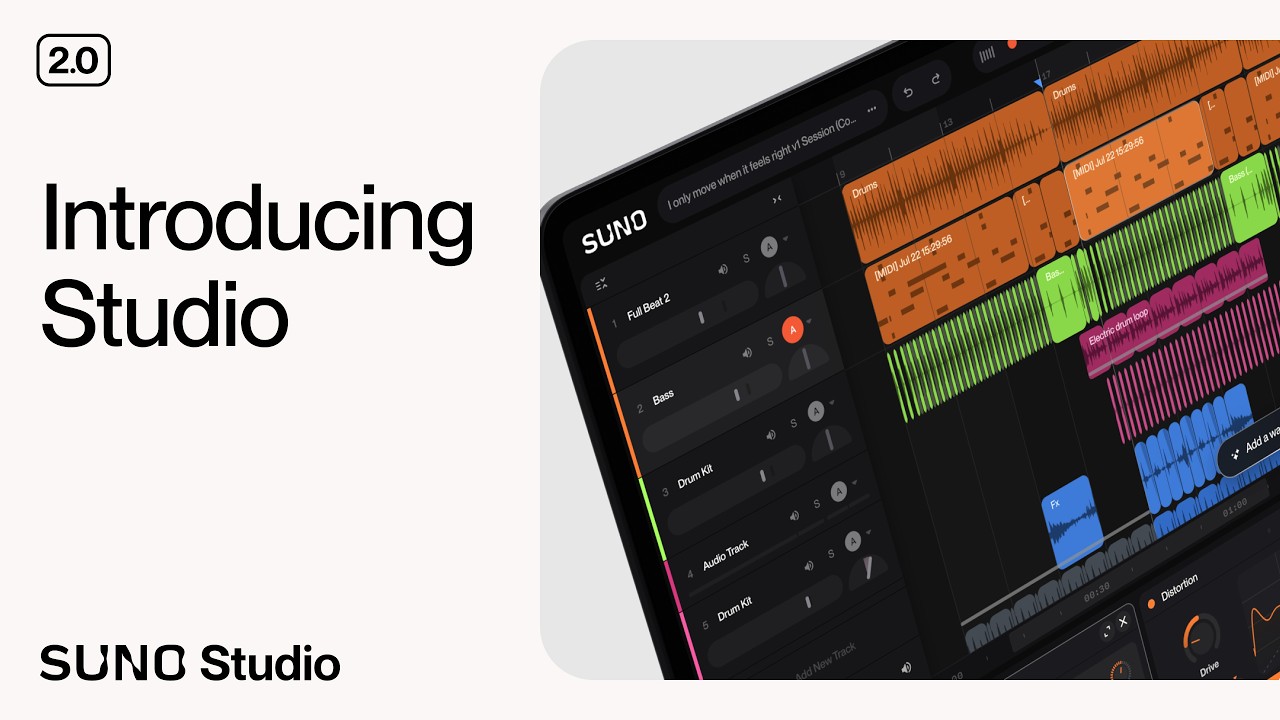
Suno has launched Studio 2.0, a major update to its browser-based AI music platform, introducing MIDI support and musical typing, live audio tracking with latency calibration, and advanced stem splitting. The update also includes AI-powered custom plugin creation, built-in audio effects and signal chains, a Studio Chat feature, and the ability to upgrade older projects to 2.0. Product manager Henry and Luke Conard presented the features in a minute walkthrough video published August 13, 2026.

Anthropic has updated Claude Tag, its Slack integration, to use channel-wide context when deciding whether to proactively respond. Previously, a lightweight classifier evaluated each message individually; now Claude reads across the full channel, its memory, and standing instructions to choose one of four actions: reply inline, start a thread, route to an existing workstream, or stay silent. The update makes Claude roughly 30% better at knowing when to respond. Available now for Teams and Enterprise customers at no additional cost.

MiniMax has launched Music 3.0, an open-weights AI music generation model capable of composing, arranging, and producing complete songs up to five minutes long from a text prompt and optional lyrics. The model uses a global-local Hybrid-LM built on Qwen3.5-8B, multi-layer residual vector quantization, flow matching, and a Flow-VAE to improve structural coherence and audio fidelity. A Structured Caption system and Prompt Enhancement tool help translate creative intent into detailed musical instructions without requiring specialist vocabulary.
DeepSeek has launched DeepSeek-V4-Pro into general availability, featuring major agent upgrades with strong production gains. The model introduces flexible reasoning effort levels — low for simple tasks, high for daily agent workflows, and max for complex tasks — across both V4-Pro and V4-Flash. It also adds native OpenAI Responses API support optimized for Codex with one-click setup. New API pricing introduces peak and off-peak rates, with off-peak 50% cheaper, effective August 16, 2026.
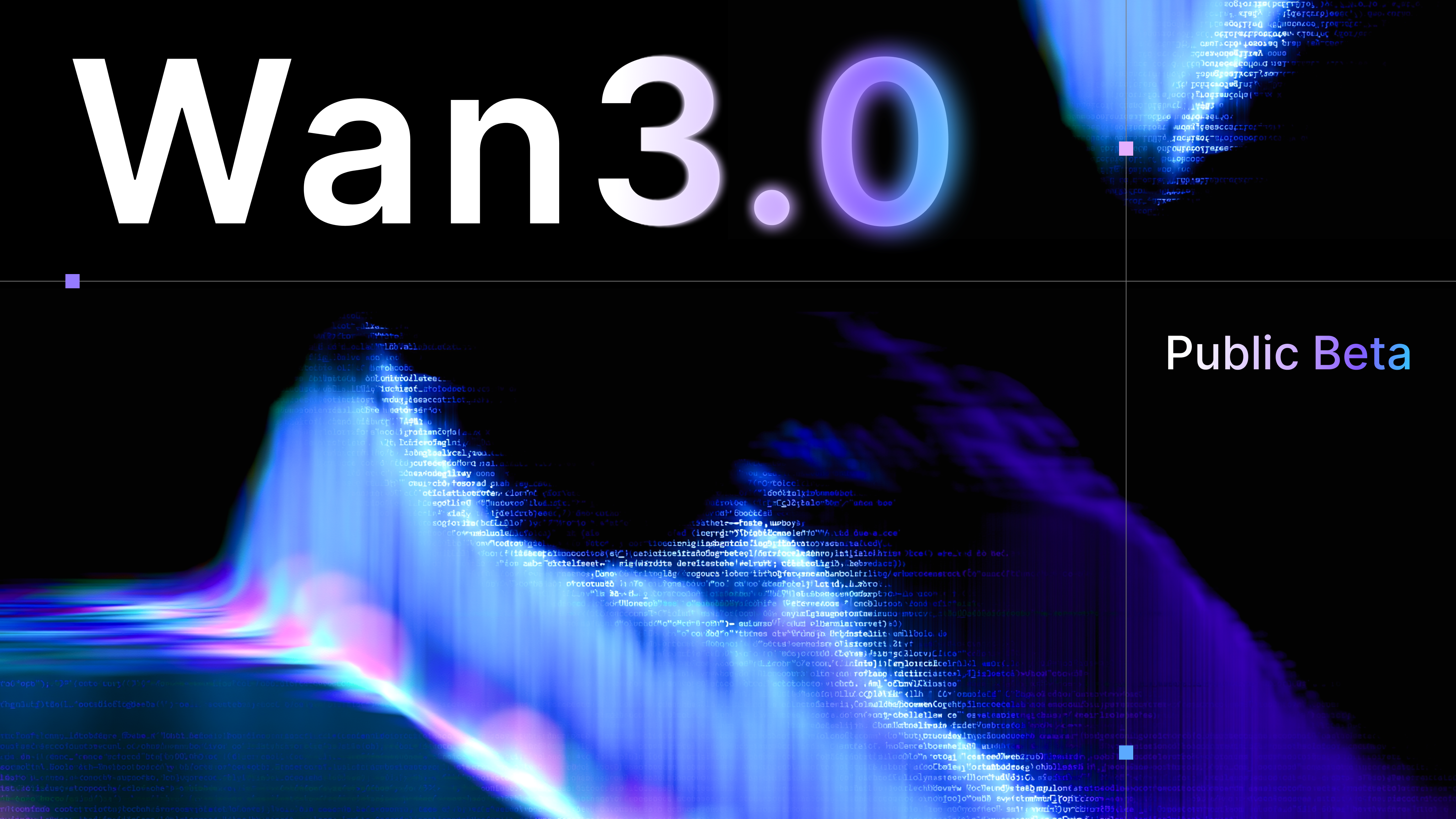
Alibaba has launched Wan3.0, the latest generation of its Wan video generation model family, now available on Alibaba Cloud Model Studio. The model generates up to 30 seconds of video in a single pass from text, images, audio, video, or documents including PPT, PDF, and XLS files — a first for the family. Wan3.0 features lifelike diverse human faces, reference-to-video consistency, and built-in video editing. API pricing starts at $0.05 per second for 480P, $0.10 for 720P, and $0.20 for 1080P.
Free subscriber bonus
Get the AI Income Database, free when you join
38+ real ways people are making side-hustle money with AI right now. Each one comes with the playbook and the exact tools to pull it off. No fluff and no course to buy. It's the bonus every new subscriber gets on day one.
- 38+ proven AI side-hustles, from first dollar to scale
- The exact tools for each one, picked from the 4,500+ we track
- Updated as new opportunities appear (subscribers hear first)
Joins the twice-weekly AI briefing read by 250,000+ people. Free forever, unsubscribe anytime.