Latest AI News
The most comprehensive AI news feed on the internet -- curated by Matt Wolfe
*News may update slower on weekends and when Matt's traveling
Get This In Your Inbox Twice a Week
Wednesday, April 29, 2026

OpenAI has traced GPT-5's growing obsession with goblin and gremlin metaphors to reward training for its Nerdy personality customization feature. Starting with GPT-5.1, goblin mentions rose 175% and gremlin mentions 52%. The Nerdy personality, just 2.5% of ChatGPT responses, accounted for 66.7% of goblin mentions. The reward signal favored creature-word outputs in 76.2% of datasets, and the behavior spread beyond Nerdy via reinforcement learning transfer and supervised fine-tuning feedback loops. OpenAI retired the Nerdy personality in March and filtered creature-words from training data.

Google is replacing Google Assistant with Gemini in cars with Google built-in, rolling out first to English-language users in the United States for both new and existing vehicles via a software update. Gemini supports natural conversation for navigation, messaging, music, and vehicle settings, and draws from manufacturer-provided owner's manuals to answer car-specific questions. A beta Gemini Live mode enables free-flowing discussions while driving. Future updates will expand to more languages and add Gmail, Calendar, and Google Home integration.

Mistral has launched remote cloud coding agents in its Vibe platform, powered by Mistral Medium 3.5, a new 128B dense model in public preview. The model features a 256k context window, scores 77.6% on SWE-Bench Verified, and is priced at $1.50 per million input tokens and $7.50 per million output tokens via API. Vibe agents run asynchronously in isolated cloud sandboxes, can be spawned from the CLI or Le Chat, and automatically open GitHub pull requests when finished. Work mode in Le Chat handles complex multi-step tasks using the same model.

Google Photos is launching an AI-powered wardrobe feature that scans your photo gallery to build a virtual closet of clothes you've been captured wearing. Users can mix and match tops, bottoms, skirts, dresses, and shoes to create new outfits, save looks, and share them with friends. Unlike Google's existing AI try-on tool in Search, which launched last year for shopping, this new feature rolls out to Android devices later this summer before expanding to iOS.

Google Gemini can now generate and export files directly from chat, including PDFs, Microsoft Word (.docx), Excel (.xlsx), Google Docs, Sheets, Slides, CSV, LaTeX, RTF, plain text, and Markdown. Announced by Group Product Manager Maryam Sanglaji, the feature lets users turn prompts into downloadable, ready-to-share files without copying or reformatting. Files can be downloaded to a device or exported to Google Drive. The update is available globally to all Gemini app users.

Anthropic's claude-api skill, first introduced in Claude Code in March 2026, is now bundled into CodeRabbit, JetBrains, Junie, Resolve AI, and Warp, giving developers production-ready Claude API knowledge inside their existing tools. The skill handles prompt caching rules, agent patterns, and model migrations automatically, staying current as Anthropic's SDKs evolve. Developers can ask Claude to improve cache hit rates, add context compaction, or upgrade to Claude Opus 4.7. The skill is open source at anthropics/skills on GitHub.

OpenAI has published a Cybersecurity Action Plan outlining how it intends to use AI to strengthen digital defenses for the United States and its allies. The plan, informed by conversations with federal, state, and commercial cybersecurity experts, is organized around five pillars: democratizing cyber defense, coordinating across government and industry, strengthening security around frontier capabilities, preserving visibility in deployment, and enabling users to protect themselves against increasingly AI-powered threats.
OpenAI has detailed how ChatGPT handles violent and harmful content, outlining training, detection, and enforcement measures. The company trains models to refuse requests for violence-enabling instructions while allowing historical or educational discussions. Automated systems using classifiers, reasoning models, hash-matching, and blocklists flag concerning activity, which trained human reviewers then assess in context. Accounts found violating policies are immediately banned. In cases of credible, imminent harm, OpenAI notifies law enforcement. A new trusted contact feature for adult users is also coming soon.
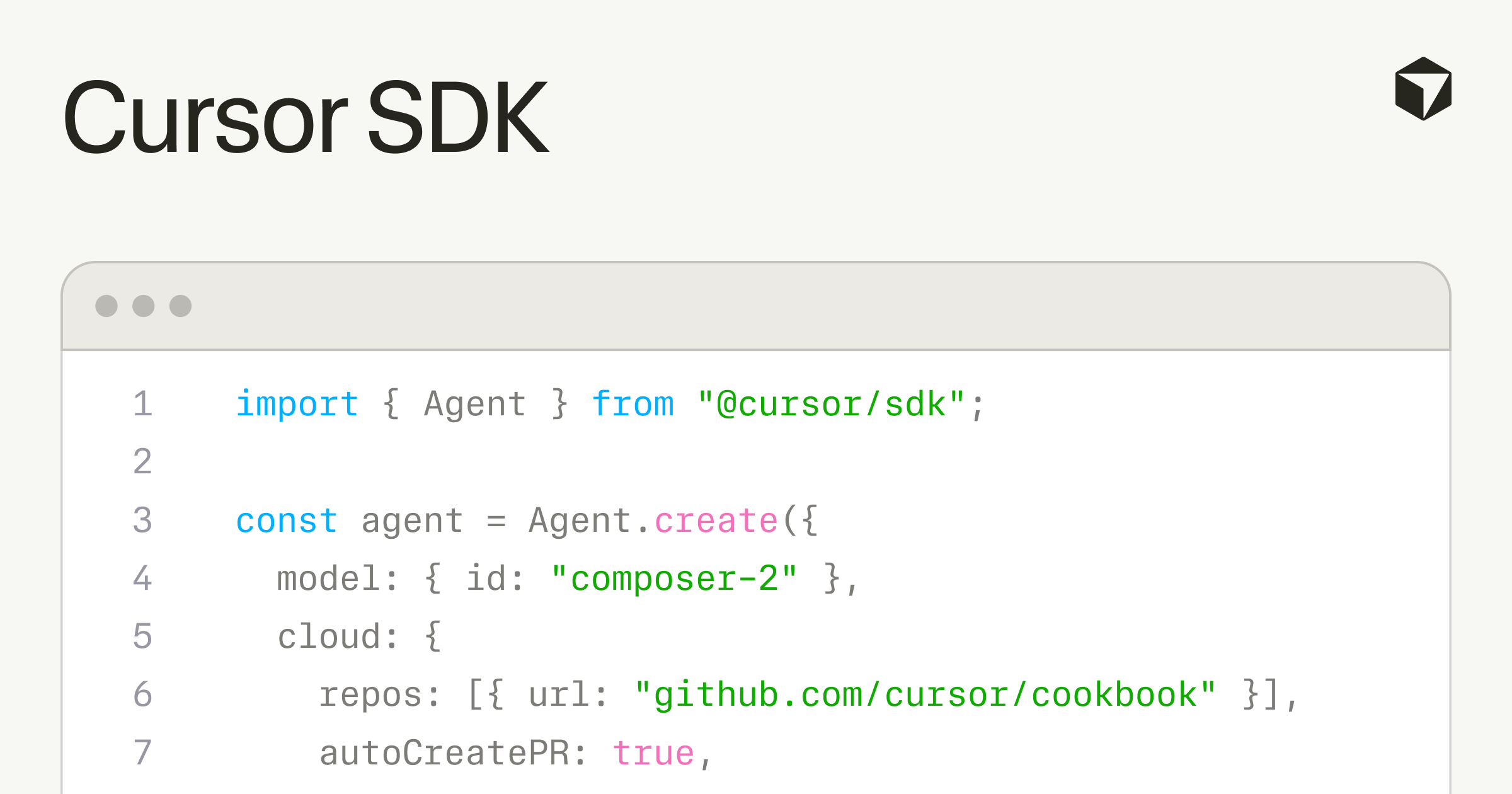
Cursor has launched a public beta TypeScript SDK that lets developers build programmatic coding agents using the same runtime, harness, and models powering the Cursor desktop app, CLI, and web app. Installable via npm install @cursor/sdk, it supports local execution, Cursor's cloud infrastructure with dedicated VMs, and self-hosted workers. Teams are using it to trigger agents from CI/CD pipelines, build internal tools, and embed agents into customer-facing products. It supports any frontier model, including Cursor's own Composer 2.

Mayo Clinic has developed an AI model capable of detecting pancreatic cancer on routine abdominal CT scans up to three years before a clinical diagnosis would typically be made. The system identifies subtle signs of disease before tumors become visible, potentially enabling curative treatment options that would otherwise be unavailable at later stages. Pancreatic cancer is notoriously difficult to catch early, making this earlier detection window a significant clinical advancement.

ElevenLabs has launched ElevenMusic, a new platform for discovering, remixing, creating, and earning from music. Built on ElevenLabs' proprietary music model, the platform combines music discovery and creation tools with a monetization component, allowing users to earn from their work. ElevenMusic represents ElevenLabs' expansion beyond its well-known AI voice technology into the music generation space, offering creators an integrated environment for AI-assisted music production and distribution.
Tuesday, April 28, 2026
Poolside has launched two foundation models and two products focused on agentic coding. Laguna M.1 is a 225B-parameter mixture-of-experts model with 23B active parameters built for long-horizon coding tasks. Laguna XS.2, a 33B-parameter model with only 3B active parameters, is released as open-weights under Apache 2.0 on Hugging Face. Both are free via Poolside's API and OpenRouter. Two products enter preview: pool, a terminal-based coding agent, and Shimmer, a cloud sandbox for building web apps and APIs with Poolside models.

Google has reportedly agreed to let the U.S. Pentagon use its AI models for classified military work covering "any lawful government purpose," according to The Information. The deal marks a significant reversal from 2018, when Google withdrew from the Pentagon's Project Maven after employee protests. Hundreds of Google researchers have again pushed back, warning CEO Sundar Pichai of "extremely harmful" uses including lethal autonomous weapons and mass surveillance. The Pentagon also deployed Google's Gemini models on its unclassified GenAI.mil platform.

Snap Inc. has launched AI Sponsored Snaps, a new ad format that places brand AI agents directly inside Snapchat's Chat inbox, letting users interact conversationally with advertisers without leaving the app. Building on existing Sponsored Snaps, which already deliver 22% more conversions at nearly 20% lower cost per action, the format targets Snapchat's nearly one billion monthly active users. Experian is the first alpha partner, using the format for credit and money management conversations. Snapchatters sent over 950 billion chats in Q1 2026.
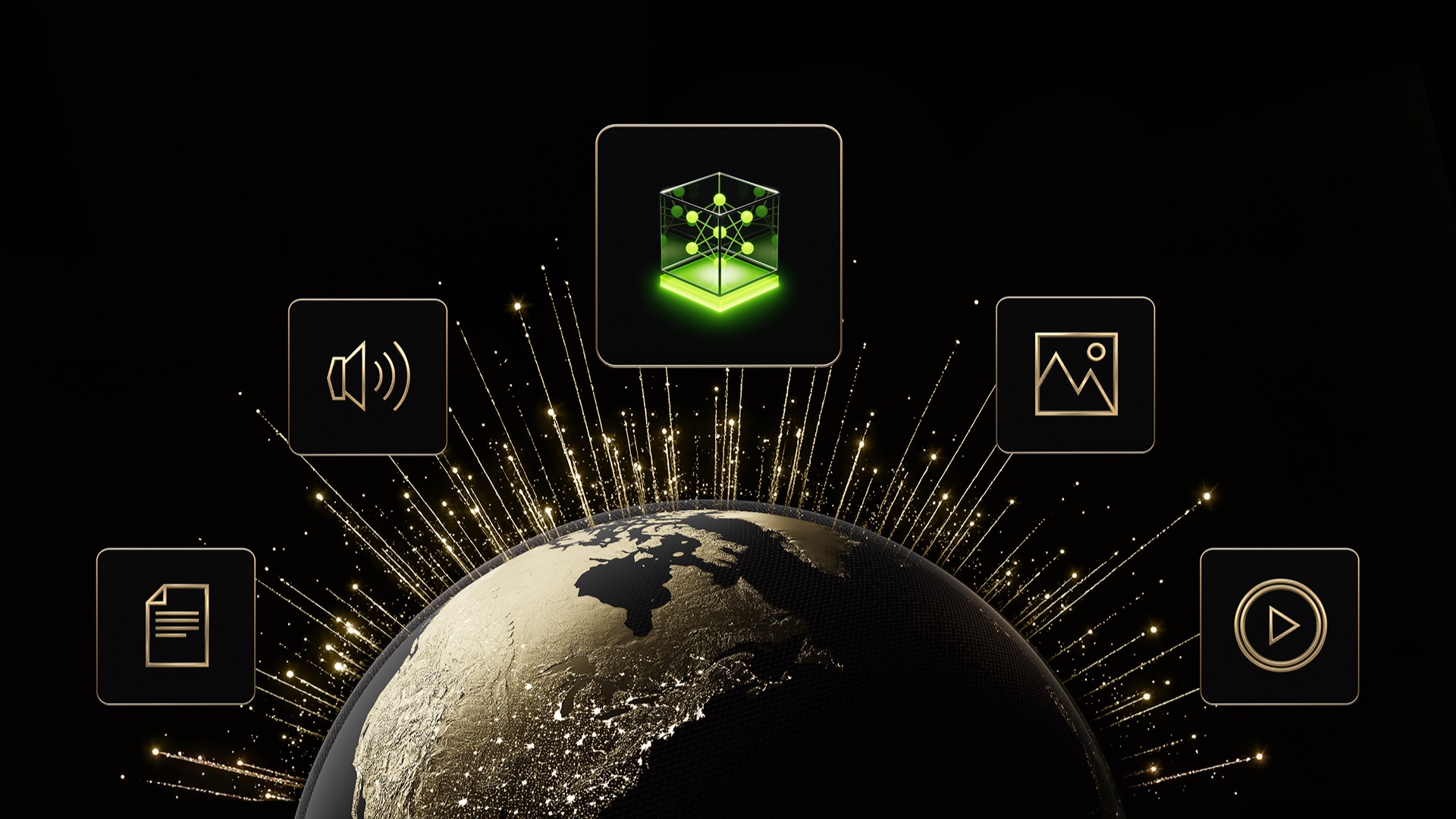
NVIDIA has launched Nemotron 3 Nano Omni, an open multimodal AI model that unifies vision, audio, and language processing into a single 30B-A3B hybrid mixture-of-experts architecture. The model delivers up to 9x higher throughput than comparable open omni models and tops six leaderboards for document intelligence and video and audio understanding. Early adopters include Foxconn, Palantir, and H Company, while Dell, DocuSign, and Oracle are evaluating it. The model is available on Hugging Face, OpenRouter, and build.nvidia.com.
OpenAI and AWS are expanding their strategic partnership, launching three capabilities in limited preview: GPT-5.5 and other frontier models on Amazon Bedrock, Codex on AWS, and Amazon Bedrock Managed Agents powered by OpenAI. Codex, used by over 4 million people weekly, can now be configured via the Bedrock API through Codex CLI, the desktop app, and a VS Code extension. Bedrock Managed Agents handles orchestration, tool use, and governance, giving enterprises a faster path from prototype to production.
Anthropic has launched a set of Claude connectors for creative professionals, partnering with Adobe, Autodesk, Blender, Ableton, Splice, Affinity by Canva, SketchUp, and Resolume. The connectors let Claude work directly inside these tools—enabling natural-language 3D modeling in Autodesk Fusion and Blender, sample searching in Splice, and batch task automation in Affinity. Anthropic also joined the Blender Development Fund and is partnering with RISD, Ringling College, and Goldsmiths to support creative education programs.

Google Translate is celebrating its 20th anniversary with the launch of a new AI-powered pronunciation practice feature. The tool, described as one of the most frequently requested additions, provides instant feedback to help users master the nuances of speaking a new language. The feature addresses one of the most challenging aspects of language learning — getting pronunciation details right — and uses AI to evaluate and respond to users in real time.

Warp, the AI-powered terminal application, has open-sourced its codebase and published a public roadmap. The move marks a significant shift for the developer tool, which previously operated as a closed-source product. By opening its code, Warp allows developers to inspect, contribute to, and build upon its terminal platform. The public roadmap gives users visibility into planned features and development priorities, increasing transparency around the product's future direction.
Monday, April 27, 2026
Anthropic has opened a Sydney office and appointed Theo Hourmouzis, formerly Senior Vice President at Snowflake for Australia, New Zealand, and ASEAN, as General Manager for Australia and New Zealand. Hourmouzis brings over 20 years of Asia Pacific tech leadership experience and will lead Anthropic's local team, deepening enterprise relationships with Commonwealth Bank and Quantium. New partnerships include Canva, Xero, and YMCA South Australia, while Anthropic also holds an MOU with the Australian government.
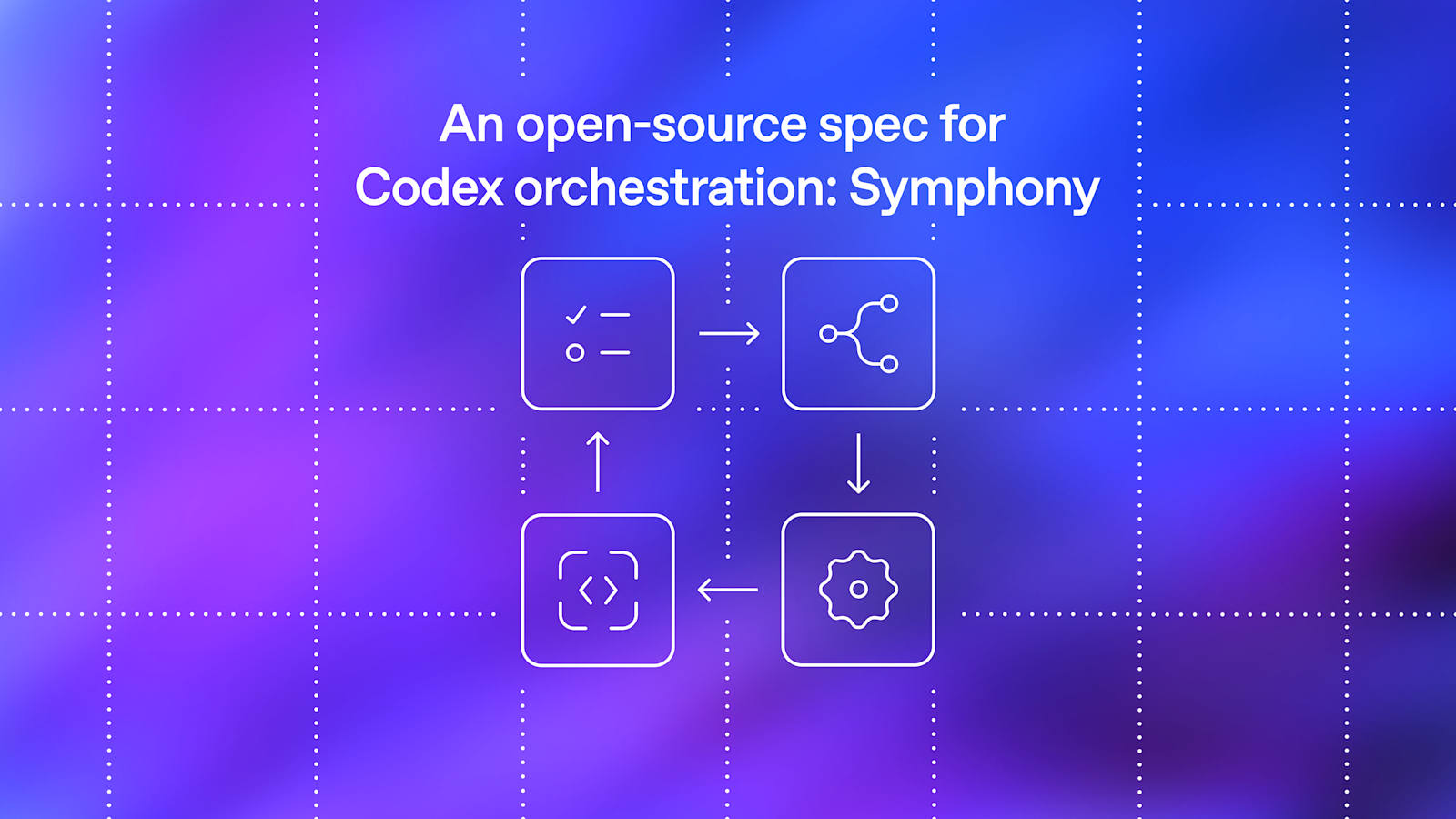
OpenAI has open-sourced Symphony, an agent orchestration spec built by Alex Kotliarskyi, Victor Zhu, and Zach Brock that turns Linear issue trackers into a control plane for Codex coding agents. Every open ticket gets a dedicated agent that runs continuously until complete, with humans reviewing results. Teams using Symphony saw landed pull requests increase 500% in three weeks. The system is technically a SPEC.md file on GitHub, allowing non-engineers like product managers to file feature requests directly and receive working implementations.

Over 600 Google employees, including more than 20 principals, directors, and vice presidents, signed a letter to CEO Sundar Pichai demanding that Google block the Pentagon from using its Gemini AI models in classified settings. Organizers say many signers work at Google DeepMind. The letter warns that classified use could cause harms without employees' knowledge or ability to stop them. The move follows a report that Google and the Pentagon are in active talks over a classified Gemini deployment deal.

Cognition has launched Devin for Terminal, a local coding agent that runs directly in your shell. Built on lessons learned developing the Devin AI software engineer, the tool brings autonomous coding capabilities to the command line without requiring cloud infrastructure. When tasks exceed local machine capacity, users can seamlessly hand off work to the cloud. The release marks Cognition's expansion beyond its web-based Devin platform into native terminal environments.

According to analyst Ming-Chi Kuo, OpenAI is developing a smartphone to compete with the iPhone, targeting mass production in 2028. OpenAI is working with MediaTek and Qualcomm on processors, with Luxshare as the exclusive manufacturing partner. Specifications are expected to be finalized by late 2026 or early 2027. Kuo believes AI agents will make the device feel distinct from an iPhone. OpenAI is also collaborating with former Apple design chief Jony Ive on other hardware, including a ChatGPT-powered smart speaker.

Elon Musk and Sam Altman are heading to a jury trial beginning April 27th in Northern California federal court over Musk's 2024 lawsuit accusing OpenAI of abandoning its nonprofit mission to benefit humanity in favor of profits. Musk, a cofounder, claims Altman and co-founder Greg Brockman deceived him into funding the company. He is seeking removal of both executives, up to $150 billion in damages, and an end to OpenAI's public benefit corporation status. OpenAI calls the suit a baseless attempt to harm a competitor.
China has blocked Meta Platforms' $2 billion acquisition of agentic AI startup Manus, citing concerns over technology leakage to the US. China's National Development and Reform Commission, a powerful state planning body, issued a one-line notice Monday ordering the deal's cancellation, prohibiting foreign investment in the startup in accordance with laws and regulations. The move was described as a surprise decision to unwind the controversial deal, with no further elaboration provided by Chinese authorities.

Microsoft is expanding its Dynamics 365 platform with new agentic customer experience capabilities, including real-time voice agents now generally available in Copilot Studio. The update adds agents across Dynamics 365 Contact Center, Sales, and Customer Insights. Key additions include a Customer Assist Agent and Quality Assurance Agent, both generally available, plus a Service Operations Agent in public preview. In Dynamics 365 Sales, five new features include a Sales Opportunity Agent and Voice to CRM notes for Outlook. Conversational Journeys is also expanding to SMS.
Microsoft and OpenAI have amended their partnership agreement, giving OpenAI the flexibility to serve products across any cloud provider while keeping Azure as its primary and first-launch platform. Microsoft's license to OpenAI IP becomes non-exclusive through 2032, and Microsoft will no longer pay a revenue share to OpenAI. OpenAI's revenue share payments to Microsoft continue through 2030 with a total cap. Microsoft remains a major shareholder as both companies plan to scale datacenter capacity and collaborate on next-generation silicon.
Sunday, April 26, 2026

Google is testing "Ask YouTube," a new AI chatbot-style search feature currently available to YouTube Premium subscribers in the US who are 18 or older. The tool generates conversational search results combining text summaries, longform videos, YouTube Shorts, and follow-up prompts, similar to Google's AI Mode. YouTube says it plans to expand the experiment to non-Premium users. Testing revealed at least one factual error, with the AI incorrectly describing the original Steam Controller's hardware.

OpenAI CEO Sam Altman published a principles document outlining five core commitments guiding the company's AGI development: democratization, empowerment, universal prosperity, resilience, and adaptability. OpenAI pledges to resist power consolidation, ensure democratic oversight of AI decisions, and expand global AI infrastructure to lower costs. The company also commits to collaborating with governments and international agencies on safety risks, including pathogen creation and cybersecurity threats, while iteratively deploying systems and updating its positions as the technology evolves.
Saturday, April 25, 2026

Alibaba's Qwen team has launched Qwen-Image-2.Pro, a new text-to-image model that improves image quality, multilingual text rendering, and instruction following compared to its predecessor. The model also delivers more consistent performance across different visual styles. Qwen-Image-2.Pro has earned a ranking of ninth worldwide in the Text-to-Image category on Arena, a competitive AI benchmarking platform. The model is currently available to try on ModelScope.
Friday, April 24, 2026

Grok Imagine has rolled out a significant update to its image-to-video generation feature, delivering dramatically improved lip sync and sharper audio quality across all generations on the platform. The enhancement ensures that dialogue accurately tracks mouth movements while sound is matched to match scene context, resulting in more realistic and coherent video output. The update is designed to close the gap between creator intent and final output, producing videos that look and sound closer to what users originally envisioned.

Google parent Alphabet will invest up to $40 billion in AI startup Anthropic, committing $10 billion immediately at a $350 billion valuation, with $30 billion more contingent on performance targets. The deal deepens Google's partnership with Anthropic, maker of the Claude AI models, just days after Amazon announced a separate $25 billion investment. Anthropic's annual run-rate revenue has surpassed $30 billion, up from $9 billion at end of 2025, driven largely by strong developer adoption of its Claude Code tool.
DeepSeek has open-sourced DeepSeek-V4 Preview, introducing two new models with 1M context length as the default across all services. DeepSeek-V4-Pro features 1.6T total and 49B active parameters, claiming performance rivaling top closed-source models and leading open models in Math, STEM, and coding. DeepSeek-V4-Flash offers 284B total and 13B active parameters for faster, cheaper inference. Both support Thinking and Non-Thinking modes. The API is live today, and legacy models deepseek-chat and deepseek-reasoner will retire July 24, 2026.
Meta has partnered with Amazon Web Services to add tens of millions of AWS Graviton cores to its compute portfolio, making Meta one of the largest Graviton customers in the world. The deal addresses the growing CPU demands of agentic AI systems that reason, plan, and execute complex tasks at scale. AWS Graviton5 cores offer faster data processing and greater bandwidth for these workloads. The agreement reflects Meta's broader strategy of diversifying compute infrastructure rather than relying on a single chip architecture.

Watch Matt Wolfe's latest YouTube video where he breaks down all of the most important AI news from the past week.

Forbes's Leadership YouTube playlist, which contains 324 videos and has accumulated nearly 35,000 views, features a range of short-form guides aimed at business leaders navigating AI adoption. Recent entries cover topics such as tasks leaders should avoid delegating to AI, how small businesses can use AI to compete with larger rivals, AI hiring considerations for 2026, and a day AI implementation playbook. The playlist also addresses AI-driven answer engine optimization as a replacement for traditional SEO strategies.

OpenAI has released GPT-5.5 via its API, offering higher intelligence and stronger token efficiency compared to previous models. The update is designed to handle complex tasks more effectively, reducing the number of retries needed to complete work. Improved token efficiency means developers can accomplish more within the same token budget, lowering costs and improving reliability for demanding applications built on OpenAI's platform.
Anthropic and NEC Corporation have announced a strategic partnership to deploy Claude to approximately 30,000 NEC Group employees worldwide, making NEC Anthropic's first Japan-based global partner. Together they will develop secure, industry-specific AI products for Japanese markets in finance, manufacturing, cybersecurity, and local government. NEC will integrate Claude, including Claude Opus 4.7 and Claude Code, into its BluStellar Scenario platform, and establish a Center of Excellence to build one of Japan's largest AI-native engineering organizations.
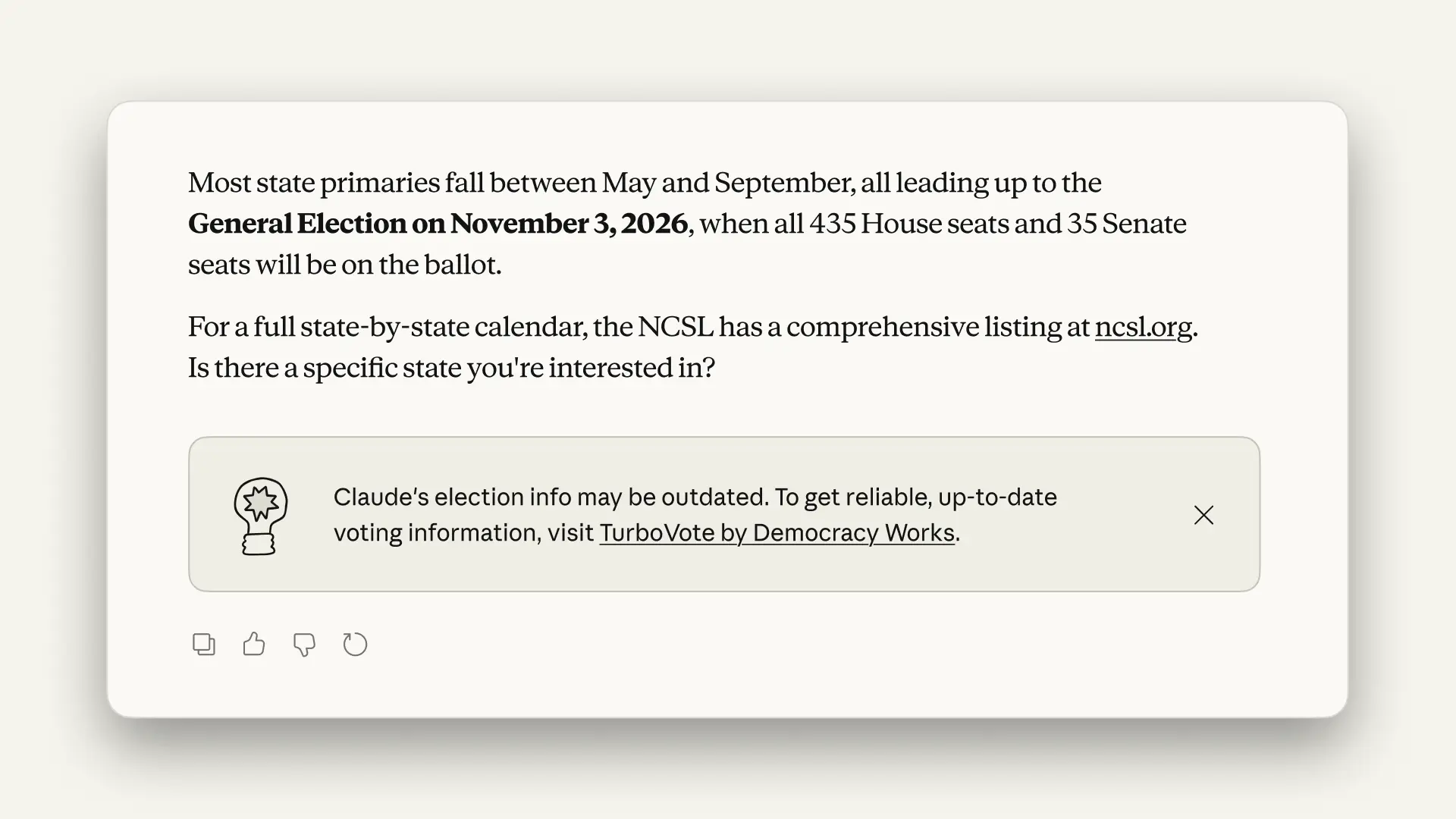
Anthropic has updated Claude's election safeguards ahead of the 2026 US midterms and Brazil's elections. Claude Opus 4.7 and Sonnet 4.6 scored 95% and 96% on political bias evaluations, and handled election-related policy prompts appropriately 100% and 99.8% of the time. New tests also assessed autonomous influence operations, with safeguards causing models to refuse nearly every task. Claude.ai will display election banners directing users to TurboVote, a nonpartisan resource from Democracy Works, for voting information.
Thursday, April 23, 2026
OpenAI has released GPT-5.5, its most capable model yet, designed for complex agentic coding, research, and knowledge work. It matches GPT-5.4's per-token latency while delivering higher intelligence and using fewer tokens on Codex tasks. GPT-5.5 scores 82.7% on Terminal-Bench 2.0 and 58.6% on SWE-Bench Pro, outperforming Claude Opus 4.7 and Gemini 3.1 Pro. It is rolling out to Plus, Pro, Business, and Enterprise users in ChatGPT and Codex, with API access coming soon.

Spotify has launched a Claude integration allowing users to connect their Spotify account directly inside Claude for personalized music and podcast recommendations based on their listening history. Both Free and Premium users can access the feature, with Premium subscribers able to describe a mood or vibe to generate a custom playlist. Claude also supports Spotify Connect, enabling device switching without leaving the conversation. Spotify confirmed it does not share audio content with Anthropic for training. The integration is available globally on web, iOS, Android, and desktop.
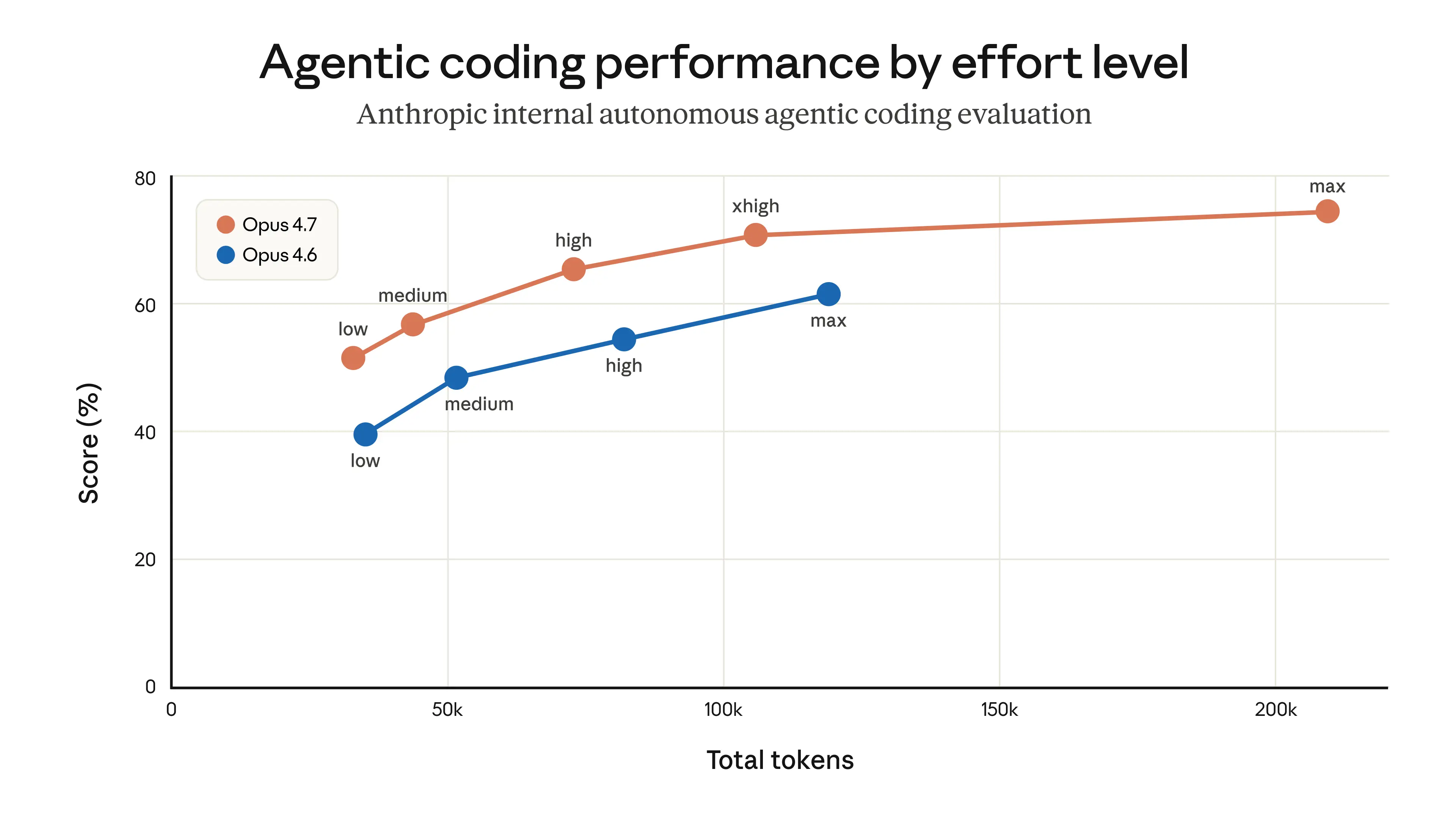
Anthropic traced Claude Code quality degradation to three issues, all resolved by April 20 (v2.1.116). On March 4, default reasoning effort was downgraded from high to medium to cut latency, hurting intelligence; reverted April 7. A March 26 caching bug caused Claude to drop prior reasoning every turn after idle sessions, making it forgetful and draining usage limits; fixed April 10. A system prompt added April 16 capping responses to 25 words caused a 3% intelligence drop and was reverted April 20. Anthropic is resetting usage limits for all subscribers.
Anthropic has expanded Claude's connector directory to include everyday lifestyle apps, adding AllTrails, Audible, Booking.com, Instacart, Intuit TurboTax, Intuit Credit Karma, Resy, Spotify, StubHub, Taskrabbit, Thumbtack, TripAdvisor, Uber, Uber Eats, and Viator. Since launching in July 2025, the directory has grown to over 200 connectors. Claude now dynamically suggests relevant apps mid-conversation based on context, and can chain multiple services together. User data from connected apps is not used to train models, and Claude confirms before making purchases or bookings.
OpenAI has launched a Bio Bug Bounty program for GPT-5.5, offering $25,000 to the first researcher who finds a universal jailbreak capable of bypassing the model's five-question bio safety challenge. Open to AI red teamers, security experts, and biosecurity researchers, the program runs from April 28 to July 27, 2026, with applications accepted through June 22. Testing is limited to GPT-5.5 in Codex Desktop only, and all participants must sign an NDA.

Leonardo.Ai Head of Creative Dwayne Koh tested GPT-Image 2.0 on advertising briefs using plain, unprompted language and found results that were creatively coherent, not just technically accurate. The model spontaneously added a TikTok sticker to a Gen Z lip balm ad without being asked. Koh, who has worked with Adidas Originals, Levi's, and Jordan, argues AI is shifting from rendering tool to taste-reflecting partner, and proposes inverting the creative process by generating ad outputs first, then reverse-engineering product identity from patterns.
Free subscriber bonus
Get the AI Income Database, free when you join
38+ real ways people are making side-hustle money with AI right now. Each one comes with the playbook and the exact tools to pull it off. No fluff and no course to buy. It's the bonus every new subscriber gets on day one.
- 38+ proven AI side-hustles, from first dollar to scale
- The exact tools for each one, picked from the 4,500+ we track
- Updated as new opportunities appear (subscribers hear first)
Joins the twice-weekly AI briefing read by 250,000+ people. Free forever, unsubscribe anytime.