Latest AI News
The most comprehensive AI news feed on the internet -- curated by Matt Wolfe
*News may update slower on weekends and when Matt's traveling
Get This In Your Inbox Twice a Week
Wednesday, July 15, 2026

DoorDash has launched dd-cli, a command-line tool now in limited beta that lets AI agents order food directly through DoorDash. The tool allows agents to search stores, find deals, and complete checkout programmatically. Early access is currently available to US and Canadian macOS developers via a waitlist. The launch signals DoorDash's push into agentic commerce, enabling software agents to handle real-world transactions autonomously. Interested developers can sign up through the beta waitlist linked by co-founder Andy Fang.

xAI has open-sourced Grok Build, its coding agent and terminal UI, with the code now available on GitHub. The release includes the agent loop covering context assembly, model response parsing, and tool-call dispatch, plus tools for reading, editing, and searching code. The extension system supports skills, plugins, hooks, MCP servers, and subagents. Grok Build can now run fully local-first: users can compile it themselves, point it at local inference, and configure everything via a config.toml file.

Perplexity has launched SPACE, a new sandbox platform powering its AI agent product Computer. SPACE creates ephemeral Firecracker microVM sandboxes that are destroyed when tasks finish, while supporting long-running sessions via rolling snapshots that capture live memory every minute and can restore state up to a week back. Credentials are never passed inside the sandbox, only injected at the moment needed. Built in 10 weeks, SPACE has already handled millions of sandbox creations and supports on-premises, offline, and bring-your-own-encryption deployments.

Thinking Machines has released Inkling, an open-weights Mixture-of-Experts model with 975B total parameters and 41B active, pretrained on 45 trillion tokens of text, images, audio, and video. It supports a 1M-token context window and features controllable thinking effort, allowing developers to trade performance for token efficiency. Inkling is available for fine-tuning on Tinker, the company's customization platform. A smaller variant, Inkling-Small, with 12B active parameters, is also previewed alongside the main release.

ChatGPT has upgraded its search functionality, making it faster and more powerful across all major platforms. Users can now search chats, projects, images, and documents from a single unified interface accessible directly from the sidebar. Available on web, iOS, and Android, the updated search includes filters to help narrow down results quickly. Once a result is found, users can select any item to open it directly in ChatGPT, streamlining navigation across past conversations and files.
A hacker who breached Suno AI shared source code with 404 Media revealing the music generation company scraped millions of songs from YouTube Music, Deezer, Genius, Pond5, Jamendo, and Freesound, totaling over 380,000 hours of audio. The code shows Suno used proxy service Bright Data to scrape YouTube and also targeted roughly 1 million hours of podcasts. The hacker also accessed hundreds of thousands of customer records including Stripe payment details. Suno confirmed a 2025 security incident but said no sensitive personal information was compromised.

OpenAI has launched Codex Micro, a $230 hardware device made in collaboration with keyboard maker Work Louder, available in limited quantities via Supply Co. The square pad features 13 mechanical switches, a joystick, dial, and touch sensor, and is designed to work with OpenAI's Codex coding platform. Six frosted keys display live status of Codex agent threads using color indicators, while command keys handle actions like push-to-talk and accepting changes. All controls are configurable through the ChatGPT desktop app.
OpenAI's Chief Global Affairs Officer Chris Lehane outlined a "reverse federalism" strategy for AI safety, where states like California, New York, and Illinois pass aligned frontier AI legislation to build a de facto national standard. The framework centers on three elements: documented safety assessments with public disclosure, incident reporting, and independent audits. OpenAI also supports a federal testing framework the Trump Administration aims to finalize by early August, and backs a US-led international forum for global AI governance standards.
OpenAI has released GPT-Red, an automated red-teaming model trained via self-play reinforcement learning to find and exploit prompt injection vulnerabilities. GPT-Red is used to adversarially train production models, resulting in GPT-5.6 Sol achieving 6x fewer failures on OpenAI's hardest direct prompt injection benchmark compared to models from four months prior. In testing, GPT-Red outperformed human red-teamers 84% to 13% on novel scenarios and successfully manipulated a live office vending machine agent to alter prices and cancel orders.
Tuesday, July 14, 2026

George Lucas has voiced support for AI in filmmaking, telling A Rabbit's Foot that artificial intelligence makes movies "much easier" to produce and comparing resistance to it to opposing the automobile. "There's nothing you can do about it. That's progress, it's the future," Lucas said. The Star Wars creator, who sold Lucasfilm to Disney for $4 billion in 2012, also criticized Hollywood's over-reliance on focus groups, arguing studios let audiences make movies instead of passionate filmmakers.

OpenAI's first consumer device will be a screenless, movable smart speaker designed as a humanlike AI companion. The battery-powered device can be carried room to room, includes a camera and sensors, and will use GPT-Live voice mode to control smart-home appliances, answer questions, and learn its owner's habits over time. Built with help from Jony Ive's LoveFrom studio and former Apple designer Evans Hankey, the speaker is planned for unveiling in 2026 with a 2027 release, though Apple's trade-secrets lawsuit could delay sales.

AI safety researcher Cereblab found that Grok Build, xAI's command-line interface, was uploading entire user repositories including full Git histories to a Google Cloud Storage bucket, even when instructed not to open files. One user had their entire home directory, including SSH keys and password manager databases, uploaded. xAI fixed the issue via a server-side flag, disable_codebase_upload set to true. Elon Musk promised all previously uploaded data will be deleted, though Cereblab notes the /privacy command was not what actually stopped the uploads.

OpenAI has responded to a trade secrets theft lawsuit filed by Apple, denying the complaint has merit. In an official statement, OpenAI said: 'While we take these allegations seriously, we're not aware of any evidence that this complaint has merit.' The company added that it believes in fair competition and employee freedom of movement, stating it remains focused on building innovative technology that empowers people everywhere. No further details about the lawsuit's specific allegations were disclosed.
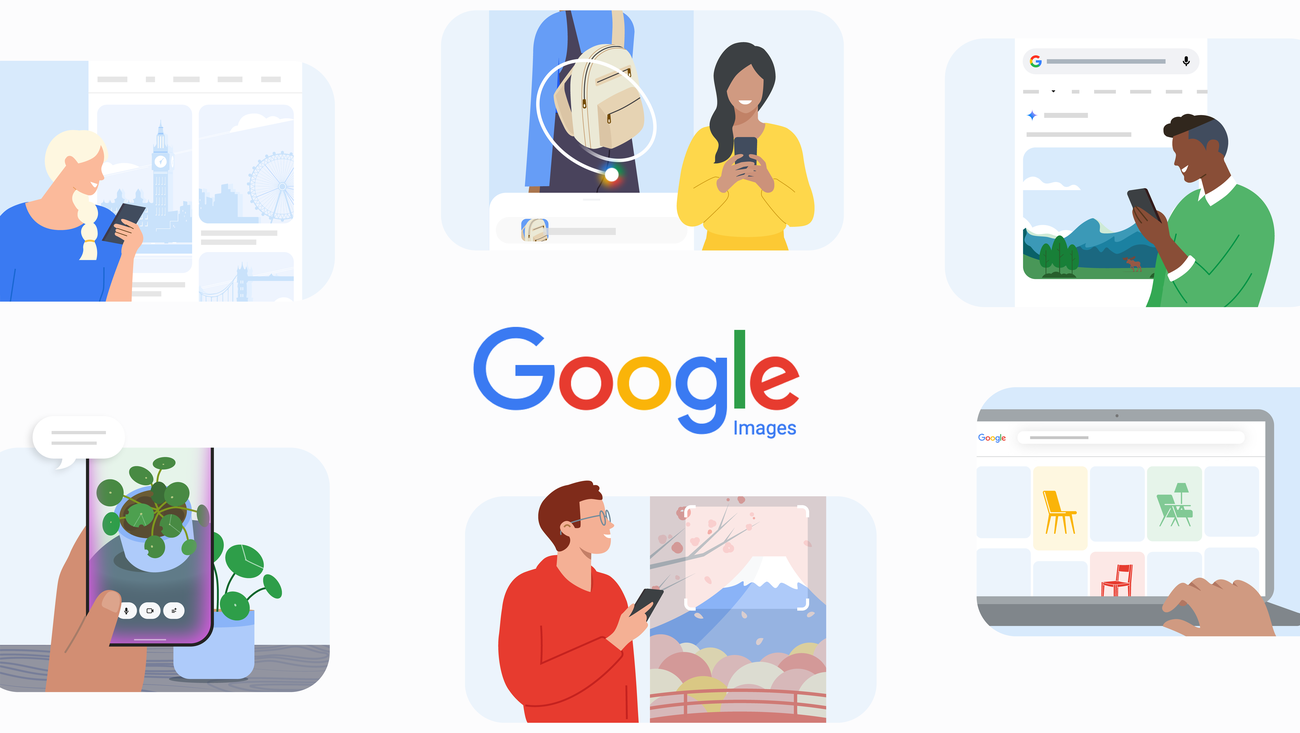
Google is celebrating the 25th anniversary of Google Images by introducing two new features. A redesigned, personalized gallery offers a dynamic, real-time browseable homepage tailored to user interests, rolling out on desktop in the U.S. Additionally, image generation is coming to AI Overviews in Search, powered by Google's Nano Banana model, letting users create custom visuals from text prompts. Both features will roll out over coming weeks in English across regions that support AI Mode.
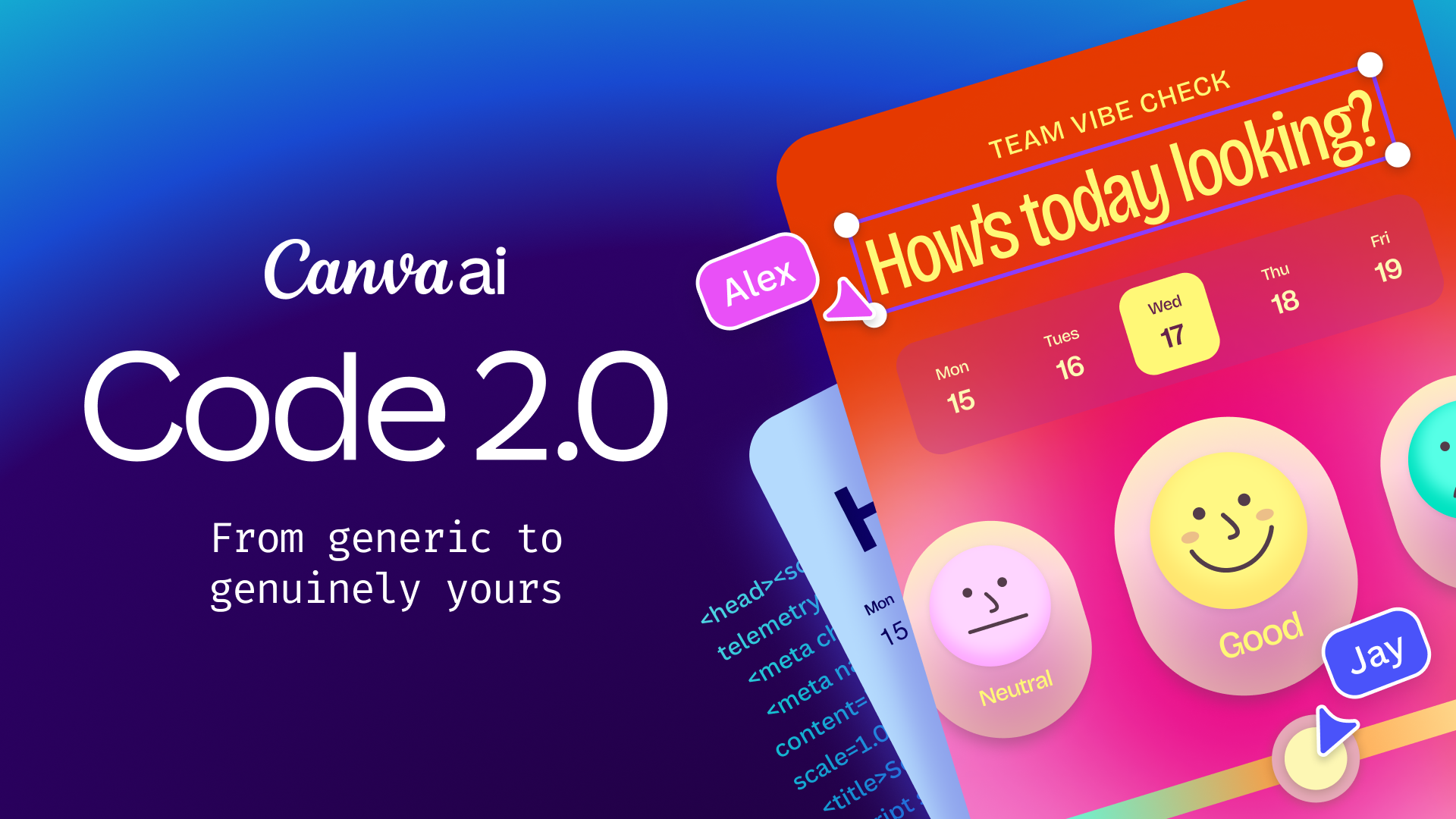
Canva has launched Canva Code 2.0 to all users, including free, pro, business, enterprise, and education tiers. The update reduces code generation time by 75% and cuts median time from prompt to published by 30%. New features include HTML import from other tools, over 50 templates, and editing within Canva's familiar drag-and-drop interface. Users can publish to custom or free domains. Since launching a year ago, the Canva community has built over six million sites using Canva Code.

Major publishers including Hachette, Cengage, and Elsevier, along with author Scott Turow, have filed a class action lawsuit against Google, alleging the company used copyrighted books to train its Gemini AI without permission. The plaintiffs also claim Google intentionally removed copyright information to conceal the practice. An internal Google document allegedly warned the move could result in $10 billion to $100 billion in fines. The case was filed in the Southern District of New York.
PrismML has launched Bonsai 27B, a 27.billion parameter multimodal model available in bit binary and 1.bit ternary variants, designed to run locally on consumer devices including smartphones. Based on Qwen3.6 27B, the bit variant has a 3.9GB footprint and achieves 11 tokens per second on an iPhone 17 Pro, making it roughly 14 times smaller than a standard FP16 model. It supports text and image input, reasoning, coding, and agentic workflows. Both variants are free under Apache 2.0 starting July 14, 2026.

Google DeepMind CEO Demis Hassabis is calling for a US-led global AI watchdog to regulate frontier models, arguing the US is best positioned to set global standards given its economic and technical standing. Writing in a blog post titled A Framework for Frontier AI and the Dawning of a New Age, Hassabis envisions an organization resembling FINRA, staffed by independent experts and open-source representatives, with authority to evaluate models pre-release and coordinate industry-wide slowdowns if models are deemed too risky. He hopes the body launches before year's end.

New York Governor Kathy Hochul has signed the nation's first statewide data center moratorium, blocking new environmental permits for data centers over 50 megawatts for up to one year. The pause gives the Department of Public Service time to develop standards addressing energy costs, water use, and air quality impacts. A separate legislature-passed bill with a stricter 20 megawatt threshold still awaits her signature. Hochul also plans to push lawmakers to roll back sales tax exemptions for large data centers when the legislature reconvenes next year.

Superhuman is launching a revamped auto-draft feature for its email client that identifies important messages and generates replies matching the user's tone from past conversations. Co-founder Rahul Vohra revealed that during testing, 60% of auto-generated drafts were sent without any manual editing. The feature uses frontier models from both Anthropic and OpenAI for writing, replacing older GPT-3.based tools. Users can personalize outputs via settings, and the system learns from usage over time.

Google is expanding Gemini in Chrome to UK desktop users starting today, with iOS support arriving next month. The AI assistant lets users summarize content, compare information across multiple tabs, and integrates with Google Calendar, Maps, Gmail, and YouTube without leaving the current page. It retains context from past conversations for tailored answers and uses Nano Banana 2 capabilities to transform images via text prompts. Security features include prompt injection detection and confirmation prompts for sensitive actions.

Spotify is rolling out a conversational AI feature in beta for Premium users aged 18 and older in the U.S., Ireland, and Sweden on iOS and Android. Available on the Home screen and Now Playing view, users can type or speak to control playback, discover new music, and get context about songs, albums, and artists. The feature also works with podcasts and audiobooks, and can surface personalized listening history insights like when you first heard a song.

Anthropic has launched Claude for Teachers, a free AI tool for verified K-12 educators in the US offering premium Claude capabilities, a library of teaching skills, and access to evidence-based curricula aligned to academic standards across all 50 states. The tool integrates with platforms like ASSISTments, Canva Education, and MagicSchool, and supports lesson planning, differentiation, and data analysis. Student data is FERPA-compliant and not used for model training. Educators who sign up by June 30, 2027 receive a full year of free access.
Monday, July 13, 2026

Apple's watchOS 27 developer beta brings Siri AI to the Apple Watch, creating a more unified assistant experience shared with iPhone and Mac. Unlike previous Siri, the upgraded version handles complex cross-app queries, surfaces notes and reminder lists, and stores conversations accessible on both wrist and phone. Reviewer Victoria Song notes it outperforms Gemini on competing Pixel and Galaxy watches. watchOS 27 also adds a new single-tap gesture, an App Launcher shortcut menu, and expanded Workout Buddy fitness insights now available in Spanish.

Perplexity has rolled out several updates to its Computer product. Brain is a self-improving memory system that builds a private context graph across sessions, lifting answer correctness 25% and recall 16% while cutting costs 13%. Claude Fable 5 is now available as an orchestrator for complex multi-step tasks, and Opus 4.8 fast mode enables quicker responses. Users can also publish websites to pplx.app or custom domains via Vercel, and private company financial data from Forge Global is now accessible to all Computer users.

Apple has filed a page lawsuit against OpenAI, accusing the AI company of orchestrating a scheme to steal trade secrets ahead of its planned hardware device launch. The suit centers on three former Apple employees: Tang Tan, now OpenAI's chief hardware officer; Chang Liu, who retained an Apple computer and exploited a security vulnerability to download confidential files; and Yu-Ting Peng. OpenAI allegedly coached departing Apple workers to evade exit security checks, requested hardware samples during job interviews, and misled an Apple manufacturing partner into sharing a proprietary metal-finishing technique.

Sam Altman and Elon Musk traded social media barbs over the weekend, with Altman accusing Musk of misleading investors on space data centers. Experts — including entrepreneurs at space data center startups and Google's orbital compute team — agree that the business won't scale until rockets like Starship become truly reusable and high-powered satellites can be mass-produced cheaply. SpaceX even conceded during its IPO road show that Starship may not be fully reusable near-term, making large-scale space data centers a question for the 2030s.

Waze is rolling out several new features globally on Android and iOS. Motorcycle mode uses AI to find two-wheeler-friendly routes and flag hazards like potholes and narrow bridges, launching first in Argentina, Brazil, Colombia, Malaysia, Mexico, Peru, and the Philippines. A new less chatty mode reduces voice prompts while preserving critical alerts. Gemini-powered conversational search lets users find destinations by voice, and conversational reporting now supports map update suggestions sent to local editors for verification.
Anthropic analyzed 309,815 Claude.ai conversations across three models and 20 languages, finding that Claude's expressed values shift measurably depending on both the model version and the language used. Using four key axes—Deference vs. Caution, Warmth vs. Rigor, Depth vs. Brevity, and Candor vs. Execution—researchers found Sonnet 4.6 leans warm and deferential, Opus 4.7 leans rigorous and cautious, and Claude expresses more warmth in Arabic and Hindi but more rigor in English and Russian.
Sunday, July 12, 2026
A concept called the Reverse Information Paradox warns that enterprises risk leaking core intellectual property to AI vendors simply by using their products. Unlike Arrow's classic Information Paradox, where sellers risk giving away knowledge to make a sale, here buyers continuously expose proprietary know-how through prompts, corrections, and evaluations that vendors may learn from. The author argues firms must control their own learning loops, private evals, and model fine-tuning rights to prevent institutional knowledge from compounding value for vendors instead of themselves.
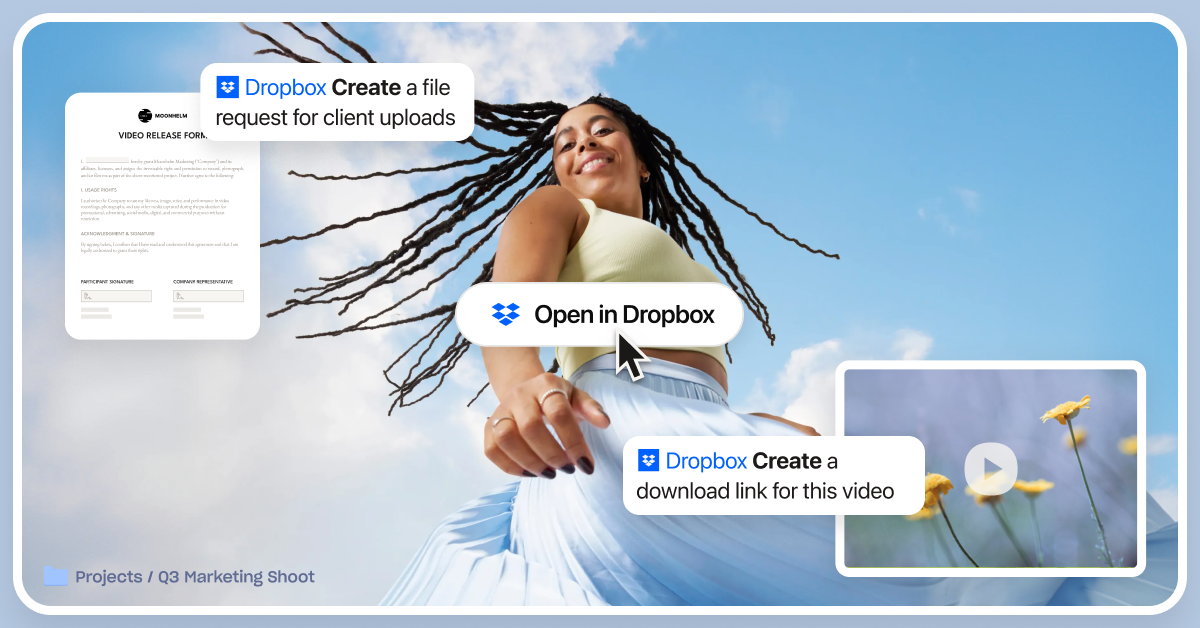
Dropbox has integrated with OpenAI's ChatGPT, ChatGPT Work, and ChatGPT Codex, letting users organize files and folders, create shareable links, generate file requests, and execute multi-step workflows directly within ChatGPT. The integration uses existing Dropbox permissions and governance controls, allowing IT administrators to expand AI adoption securely. Dropbox reports partner AI integration usage has grown over 200% in the past month. The company serves more than 700 million registered users who can now connect the official Dropbox plugin to begin using these capabilities.
OpenAI has temporarily removed the hour usage limit for Codex and ChatGPT Work across all Plus, Business, and Pro plans. The company is also rolling out efficiency improvements to GPT 5.6 Sol that will reduce usage consumption, allowing users to accomplish more before hitting limits. OpenAI announced the exact impact will be quantified and shared later. The platform has reached 6 million active users, and a usage reset was deployed alongside these announcements.
Anthropic is extending Claude Fable 5 access on all paid plans through July 19, while also keeping Claude Code's weekly rate limits 50% higher than normal for the same period. Users on paid plans can spend up to half of their weekly usage limit on Fable 5. Once that cap is reached, they can continue using Fable 5 by spending usage credits, or switch to a different model to keep working within their remaining weekly limits.
Friday, July 10, 2026

Meta has disabled an Instagram AI feature tied to its new Muse Image model that allowed users to generate AI images of public accounts simply by tagging them, after significant backlash. The feature, announced Tuesday, let anyone use public Instagram content in AI creations without the account owner's permission. Critics including the National Center on Sexual Exploitation warned it enabled sextortion. The Screen Actors Guild urged members to opt out. Meta acknowledged the feature missed the mark and removed it entirely.

Apple filed a lawsuit Friday against OpenAI in the U.S. District Court for the Northern District of California, alleging trade secret theft and breach of contract. The complaint targets Chief Hardware Officer Tang Tan, a year Apple veteran, accusing him of using confidential project code names during recruiting, asking candidates to bring Apple hardware components to interviews, and coaching departing employees to evade security. Apple also names Chang Liu, who allegedly kept an Apple laptop and downloaded confidential technical documents after joining OpenAI in 2026.

Claude Code's desktop app now includes a built-in sandboxed browser, allowing Claude to pull up documentation, designs, or any website and interact with them the same way it does with local dev servers. Claude can read pages, click through links, and take actions within the browser. The sandbox is configurable, letting users choose whether sessions persist between uses. The feature is available now in the latest version of the Claude Code desktop app.

Sunrun, a solar and home energy storage company, is launching a pilot program to build a distributed AI compute network by placing small compute nodes in customers' homes equipped with its solar and battery systems. Customers will be compensated for hosting the nodes, while Sunrun sells the aggregated compute power to enterprise AI buyers. The program targets Sunrun's 1.1 million customers, who can join a waitlist. It comes as over 70 percent of Americans oppose new data centers due to pollution, noise, and resource concerns.

Instagram head Adam Mosseri says users who dislike AI content should opt out of seeing it in their feeds, but the platform won't filter AI posts entirely. Speaking on Lenny Rachitsky's podcast, Mosseri said Instagram should label AI content rather than ban it, and that AI fans should be able to have an all-AI feed. He acknowledged detecting AI is increasingly hard as models improve, and suggested labeling camera-captured content instead. Instagram also launched Meta's Muse Spark AI image generator, drawing exploitation concerns from child safety advocates.

Watch Matt Wolfe's latest YouTube video where he breaks down all of the most important AI news from the past week.
Thursday, July 9, 2026
"To celebrate the launch of GPT-5.6 Sol, OpenAI is resetting rate limits twice across ChatGPT Work and Codex over a hour window. The move is designed to give users extended access to try ambitious tasks and fully explore the new model's capabilities without hitting usage caps. The temporary boost applies to both ChatGPT Work and Codex simultaneously, encouraging users to experiment broadly with GPT-5.6 Sol and get comfortable with what the model can do during the launch period."
Anthropic and UST are partnering to deploy Claude across 20,000 of UST's engineers, architects, and consultants worldwide. UST, which builds engineering systems for semiconductor, automotive, and manufacturing clients, is integrating Claude Code into its iDEC chip validation platform, where it reads hardware schematics, writes regression tests, and compares live equipment data against digital twins. The pipeline already cuts validation cycle times by 50 to 70%, condensing four-day turnarounds into 48 hours. UST is also embedding Claude into healthcare, telecom, and banking platforms.

Google has made AlphaEvolve generally available to all users. AlphaEvolve is a code optimization and discovery agent built on Google's Gemini model, designed to help organizations, researchers, and developers tackle some of their most difficult business problems. The tool uses AI to automate and improve code-based problem solving at scale, broadening access beyond any earlier limited release. Its general availability marks a significant step in Google's push to bring advanced AI coding agents to a wider audience.

Meta has launched Muse Spark 1.1, a multimodal reasoning model from Meta Superintelligence Labs, now available via a public preview of the new Meta Model API for developers. The model features major improvements in agentic tasks, computer use, coding, and multimodal understanding, with a 1 million token context window. It can orchestrate multi-agent systems, delegate to parallel subagents, and zero-shot generalize to new tools and MCP servers. It is also live in Thinking mode on the Meta AI app and meta.ai.

Microsoft AI has partnered with poet and Poetry Pharmacy author William Sieghart and creative studio Gravity Road to launch Ode Poetry, a digital experience at odepoetry.ai that uses MAI audio models to replicate Sieghart's one-on-one poetry consultation sessions at global scale. The app uses MAI-Transcribe-1.5, which achieves a 4.86% Word Error Rate on the FLEURS benchmark, and MAI-Voice-2 to recreate Sieghart's distinctive vocal style from a short audio sample.
Anthropic has reset the hour and weekly rate limits for all Claude users. The reset affects both limit types simultaneously across all user tiers. Rate limits on Claude typically restrict how many messages or tokens users can send within a given timeframe, and resets like this temporarily restore full access for users who had hit their caps. No reason was given for the reset, but it offers immediate relief to heavy users who had reached their usage ceilings.
OpenAI launched ChatGPT Work, an agent powered by the new GPT-5.6 model that can manage apps, files, and long-running projects for hours. It connects to tools like Slack, Microsoft Teams, Google Drive, Salesforce, and Gmail via plugins, and can produce slides, sheets, docs, and web apps. Scheduled Tasks let it run workflows automatically. Available now for Pro, Enterprise, and Edu plans, with Plus and Business rollout coming within days. Nearly 100% of OpenAI's internal teams already use it.
Anthropic has launched Reflect, a beta tool that lets Claude users track and visualize their AI usage patterns across the past 1, 3, 6, or 12 months. Available in Settings on Claude's web and desktop apps, the dashboard shows key topics, usage patterns, and task types, and uses a 4D AI Fluency Framework covering delegation, description, discernment, and diligence. Users can set quiet hours or break reminders. The feature is available to Free, Pro, and Max users with Memory enabled.
OpenAI has launched GPT-5.6, a family of three models: Sol (flagship), Terra (balanced), and Luna (cost-efficient). Sol sets state-of-the-art scores on Agents' Last Exam at 53.6, beating Claude Fable 5 by 13.1 points, and leads the Artificial Analysis Coding Agent Index at 80. A new "ultra" setting coordinates four parallel agents for demanding tasks. All three models outperform competing frontier models at significantly lower cost, with Luna and Terra beating Fable 5 at roughly one-sixteenth the price.
Free subscriber bonus
Get the AI Income Database, free when you join
38+ real ways people are making side-hustle money with AI right now. Each one comes with the playbook and the exact tools to pull it off. No fluff and no course to buy. It's the bonus every new subscriber gets on day one.
- 38+ proven AI side-hustles, from first dollar to scale
- The exact tools for each one, picked from the 4,500+ we track
- Updated as new opportunities appear (subscribers hear first)
Joins the twice-weekly AI briefing read by 250,000+ people. Free forever, unsubscribe anytime.