Latest AI News
The most comprehensive AI news feed on the internet -- curated by Matt Wolfe
*News may update slower on weekends and when Matt's traveling
Get This In Your Inbox Twice a Week
Friday, November 13, 2026

The Claude Code desktop app now supports custom themes via mods, allowing users to change colors and add animated backgrounds. Users can describe their desired look directly to Claude or get started quickly using the theme-examples plugin. Themes currently work in local sessions only, with cloud session support coming soon. Users are encouraged to update to the latest version of the desktop app to try the feature, and documentation is available for those who want to write themes manually.

Anthropic has expanded access to Claude Duet, inviting all US-based Pro, Max, and Ultra subscribers who were on the waitlist as of the previous day. The research preview includes usage limit resets: three for Pro subscribers and one each for Max and Ultra subscribers. Users should check their inboxes for invitations. Anthropic says it aims to expand Claude Duet to countries outside the US very soon. Those not yet on the waitlist can still join via the provided link.

Watch Matt Wolfe's latest YouTube video where he breaks down all of the most important AI news from the past week.

Research by former OpenAI scientist Will DePue of Unemployment Labs found that top Chinese AI models from DeepSeek, Moonshot AI, MiniMax, and Ant Group were trained on Nvidia Blackwell GPUs banned from export to China. DePue analyzed model weights, which retain fingerprints of training hardware, to identify Blackwell chip signatures. Epoch AI estimates roughly two million advanced chips entered China in 2024-2025 via smuggling schemes, with 275,000 Nvidia accelerators imported to Malaysia alone, a common workaround for Chinese firms.
Anthropic's William Hu published a guide on building always-on AI agents using five core primitives: an event inbox, timers, memory, permissions, and an outbox. Unlike typical agents triggered only by user messages, always-on agents are stateful and proactive, waking periodically to handle webhooks, scheduled tasks, and background jobs. The guide notes recent model advances have made these agents more practical, with Opus 5.5 costing 78% less per solved task than Opus 5 on long-horizon coding benchmarks.

Google has added Google Wallet to its Gemini app's Personal Intelligence feature, rolling out now for all U.S. users on web, Android, and iOS. Users can connect Wallet and optionally link bank and credit card accounts via Plaid for deeper insights. By tagging @Google Wallet in chat, users can ask Gemini to visualize spending, find forgotten subscriptions, and build holiday budgets. Gemini can only read account data and cannot move or invest money.
OpenAI has launched ChatGPT Wallet, a secure payment system for AI agents built in partnership with American Express, Mastercard, and Visa. The wallet lets agents complete purchases without exposing users' actual card details, requiring biometric security checks like Face ID or fingerprint scans for every transaction. Initially available to ChatGPT Pro subscribers in the US through the dots feature, it preserves existing card rewards and dispute protections. OpenAI also released a Commerce Partner Playbook to help businesses support agentic purchases through existing systems.
Thursday, November 12, 2026

Reuters reports that ousted Nvidia CEO Jensen Huang had a relationship with a third employee, adding to two previously reported extramarital affairs that led to his resignation. The other two women are Alice Huang, suspected by US intelligence of being a Chinese spy, and Kimberly Powell, Nvidia's VP of healthcare. CFO Colette Kress was named interim CEO. Nvidia's board is searching for a permanent replacement as the company's stock has fallen over 30% since its early October peak.

Google has launched Gemini 4 Hydrogen, a cost-efficient model designed for everyday coding and agentic workflows. Built for rapid iteration, it handles repository coding, debugging, interactive web development, and multimodal workflows. It runs standalone across four configurable thinking levels or alongside frontier models like Gemini 4 Carbon and Gemini 4 Argon. Hydrogen features tighter instruction following and fewer fabricated claims. It's available via the Gemini API, Google AI Studio, Android Studio, and for paid AI Pro or Ultra subscribers through Google Antigravity.

Google has launched Gemini 4 Hydrogen, a fast model built for everyday coding and agentic workflows, priced at $1.50 per million input tokens and $7.50 per million output tokens across a 1 million-token context window. Available in Google AI Studio, the Gemini API, and the Gemini app, Hydrogen finishes tasks 2.5 times faster than Gemini 3.8 Flash and triples Terminal-Bench 4.1 scores. Google also introduced Orchestrator in Google Antigravity, which dynamically switches between Hydrogen and frontier models, achieving 19% faster completion with 24% less quota usage.

NVIDIA announced that Jensen Huang has resigned as President, CEO, and board member, effective immediately. CFO Colette Kress, who joined NVIDIA in September 2013 and previously held finance roles at Cisco and Microsoft, has been appointed Interim CEO while retaining her CFO role. The board is searching for a permanent successor, considering both internal and external candidates. Harvey C. Jones, a year technology veteran and former Synopsys CEO, was named NVIDIA's first-ever Chair of the Board.

Google has opened pre-orders for its Gemini-powered Intelligent Eyewear collections, made in collaboration with Warby Parker, Gentle Monster, and Samsung. Warby Parker frames start at $395 in three styles, while Gentle Monster's six bold designs start at $449. Both work with Pixel, Samsung, and iPhone devices. Features include a megapixel camera, nine-hour battery, open-ear speakers, Google Maps navigation, real-time translation in plus languages, and a Guided Vision accessibility mode. Glasses go on sale December 10.
OpenAI pledged $2 million at the Paris Peace Forum to support the Coalition for Children's Rights and Protection in the Age of AI, after signing the Charter of Engagement for Safer AI for Children. The funding supports shared measurement tools to help researchers assess AI's risks and opportunities for children, informing safer products and policy. Research teams retain independence and must publish all findings, including negative results. OpenAI also expressed intent to engage with EU policymakers as the EU Kids Act develops.
Wednesday, November 11, 2026

Nvidia CEO Jensen Huang allegedly had an extramarital affair with Kimberly Powell, the company's vice president of health care, who reports directly to him, according to five former employees. The relationship was reportedly captured on video at a San Jose hotel during Nvidia's March GTC conference, with a bystander allegedly pressured to sign an NDA. This comes as Huang already faces a board investigation led by Wachtell, Lipton, Rosen & Katz over a separate affair with a woman U.S. intelligence identified as a Chinese spy.

Google has launched the Gemini Decisions API, powered by the new Gemini Decision 1 model, available through the Gemini API and Google AI Studio. The API evaluates up to 1,000 yes/no, multiple-choice, and rubric-scoring questions in a single forward pass across text, images, audio, video, and PDFs, returning confidence scores in 150–250 ms. Priced at $0.10 per 1M input tokens with zero output-token charges, it is nearly 5x cheaper than Gemini 3.5 Flash-Lite. Google Notebook, Stitch, and Search already use it internally.
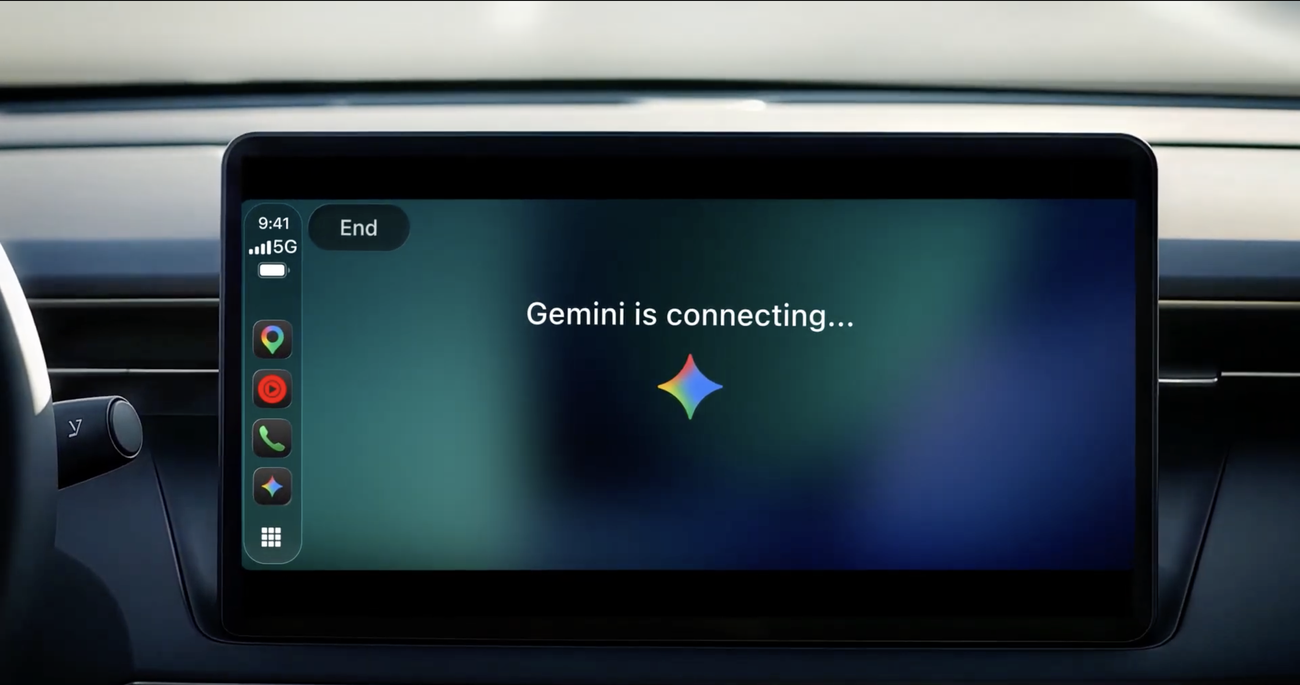
Google has launched the Gemini app on Apple CarPlay, bringing hands-free AI conversations to iOS users during their commutes. Following rollouts on Android Auto and Google built-in cars, the update lets drivers use Gemini Live for natural, free-flowing conversations via their car's display. Features include calendar briefings, Gmail inbox summaries, local recommendations, and brainstorming sessions. Conversations sync automatically to the Gemini iPhone app. The rollout is global for all Gemini iOS users across every supported Gemini Live language.

Google has launched an experimental AI tool called Tabletop that generates customizable collaborative hubs for coordinating with friends and family. Similar in appearance to workplace apps like Asana and Monday, Tabletop lets users describe what they need and vibe-code personalized interactive tools such as savings trackers, chore charts, trip itineraries, dinner polls, and expense splitters. Multiple users can join a shared space simultaneously, similar to Google Docs. Access is currently rolling out via a waitlist and is limited to users aged 18 and over in the US.
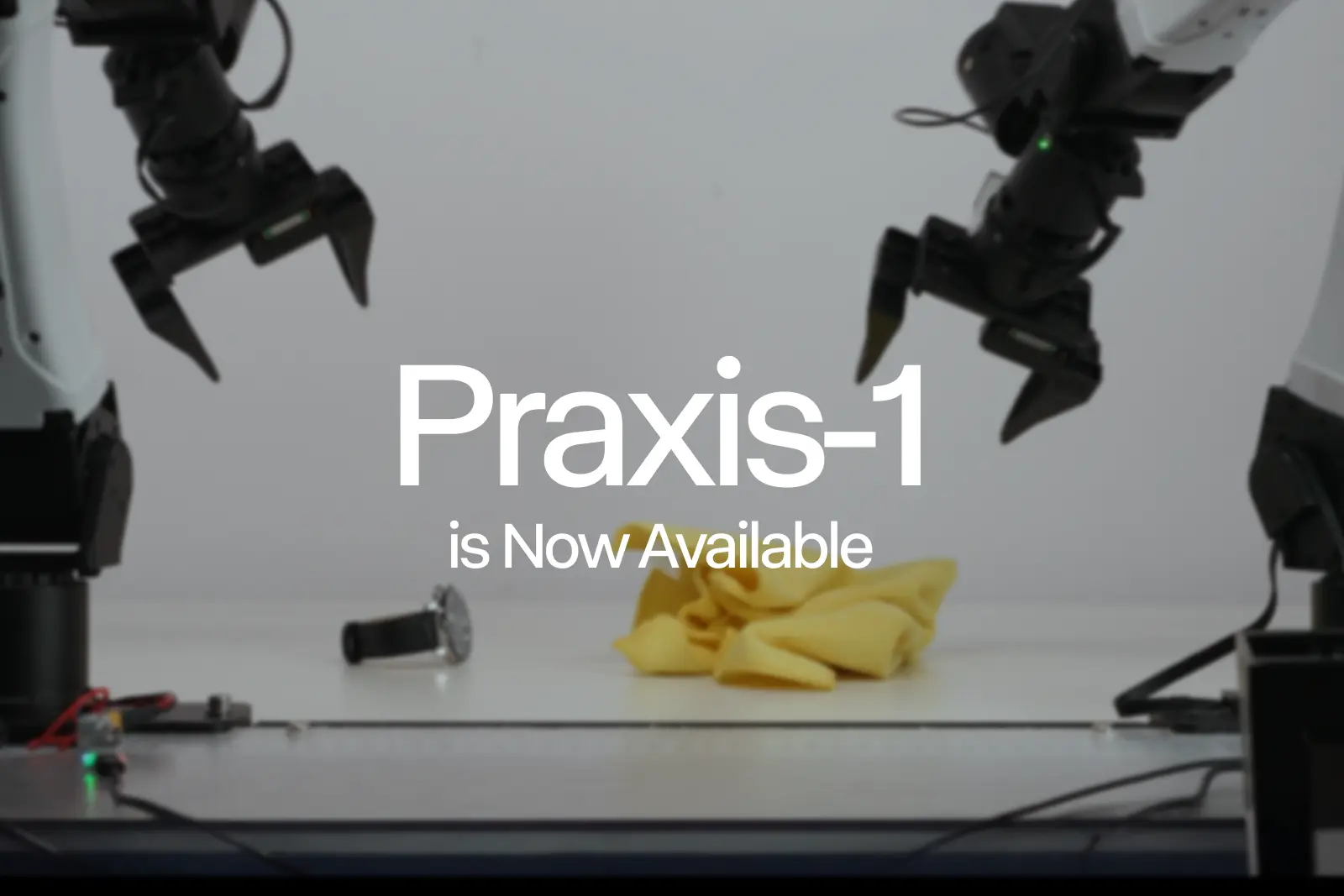
Runway has released Praxis-1, a 27B-parameter mixture-of-experts diffusion transformer world action model, as open weights under the Apache 2.0 license. The model tops NVIDIA's RoboLab-120 leaderboard with a 46.2% success rate across 1,200 episodes, outperforming FLUX 3 Action at 42.9% and Cosmos3 Nano at 36.8%. Launch partners Noble Machines, Standard Bots, and Ultra have already deployed it on humanoid, industrial arm, and warehouse robots. Praxis-1 is available on GitHub, Hugging Face, and vLLM-Omni, supporting full fine-tuning and LoRA across NVIDIA hardware.

DeepMind has launched AlphaGenome 2, a next-generation DNA sequence model that predicts how genetic variants affect gene regulation across hundreds of specific human cell types and states. Trained on over 107 million individual cell profiles across 68 tissues, it identifies nearly twice as many causal variants as its predecessor—30% vs. 16% on the TenK10K immune cell dataset. The conditional model also adapts to new single-cell experiments without retraining and is available via the AlphaGenome API for non-commercial research.

Adobe showcased experimental AI tools at its annual Max conference, including Project Screen Test, which lets creators develop AI characters by conversing with them in an audition-like environment to shape personality, voice, and backstory. Project Sight Span converts flat photos, paintings, or illustrations into navigable 3D scenes, generating content beyond the original frame. Project Sound Bender auto-syncs AI audio to video clips via an interactive canvas. Project Rinse Repeat copies photo edits and applies them automatically to other subjects in the same image using native Photoshop tools.
Tuesday, November 10, 2026
OpenAI has launched "Businesses in ChatGPT" in beta, giving companies a new way to connect with the 1.2 billion weekly ChatGPT users. Through Business Hub, businesses can claim and verify their profile, update product feeds with pricing and availability, and access aggregated engagement insights like mentions and website clicks. Eligible U.S. ecommerce and online service businesses can also build Business Agents — branded AI assistants that answer customer questions within ChatGPT. Shopify merchants can connect directly via Business Hub or Shopify admin.

Google has expanded Gemini Intelligence to the Motorola Signature 27, available for U.S. pre-order on November 19, and to Pixel 10, Pixel 10 Pro XL, and Pixel 10 Pro Fold via a Pixel Drop update. New features include Rambler, which converts spoken thoughts into organized text in real-time, and Create My Widget, which builds personalized homescreen widgets using Gmail, Calendar, and Search. Task automation is expanding to the UK, India, and Japan, and Android Auto will soon receive proactive Gemini suggestions.
Anthropic has launched Claude Whiteboards, Claude Sheets, and Claude Data on all paid plans. Whiteboards lets teams brainstorm with Claude on a shared board with timelines and owners, exportable to Miro, Lucid, or Vani. Sheets generates spreadsheets with formulas, tabs, and drop-downs from a prompt, exportable to Excel or partner tools like Airtable and Smartsheet. Claude Data, formerly Claude Dashboards, adds certified queries, data stories, live sharing, and caching, with partners including Amplitude and Mixpanel.
Anthropic has updated Claude to let partner apps like Notion, Asana, Canva, Dropbox, and Webflow open directly inside the chat interface, so users can work in the full tool alongside Claude without switching tabs. Claude can now make changes to open pages, rows, or files, with edits appearing in real time as users approve them. The feature, built on MCP Apps and the Model Context Protocol, is rolling out on web and desktop across all plans as part of the new Claude experience.
Anthropic has launched Claude Sheets, Claude Whiteboards, and Claude Data as new artifact types, letting teams collaboratively build spreadsheets, digital whiteboards, and dashboards directly in Claude. Interactive connectors now let partners embed apps like Adobe, Atlassian, Salesforce, NetSuite, and Workday inside Claude without tab-switching. The Claude Marketplace lists over 9,000 connectors built on the Model Context Protocol. Claude Meetings, which will take notes during calls, is coming soon. Enterprise plans include audit logs, a Compliance API, and isolated virtual machines per session.

Anthropic, PBC has launched the roadshow for its proposed IPO of Class A common stock, offering 825 million shares priced between $70 and $78 each. Of those, 801 million shares are offered by Anthropic itself, with roughly 23.6 million sold by existing stockholders. Anthropic will not receive proceeds from the selling stockholders' shares. The company has applied to list on the Nasdaq Global Select Market under the ticker "ANT," with Goldman Sachs and Morgan Stanley serving as underwriters.

At Adobe MAX 2026 in Miami Beach, Adobe announced major expansions of its Creative Agent across Creative Cloud and Adobe Firefly, plus local MCP integrations for Photoshop, Illustrator, Premiere, and After Effects. Adobe Firefly evolves into a full AI creative studio combining tools, top industry models from partners including Google, OpenAI, ElevenLabs, and Kling, with an agentic creative partner. Expanded deals with Google bring Acrobat to Workspace and Adobe tools to AI Mode in Search, while Microsoft gets optimized Arm-based versions of flagship Adobe apps.
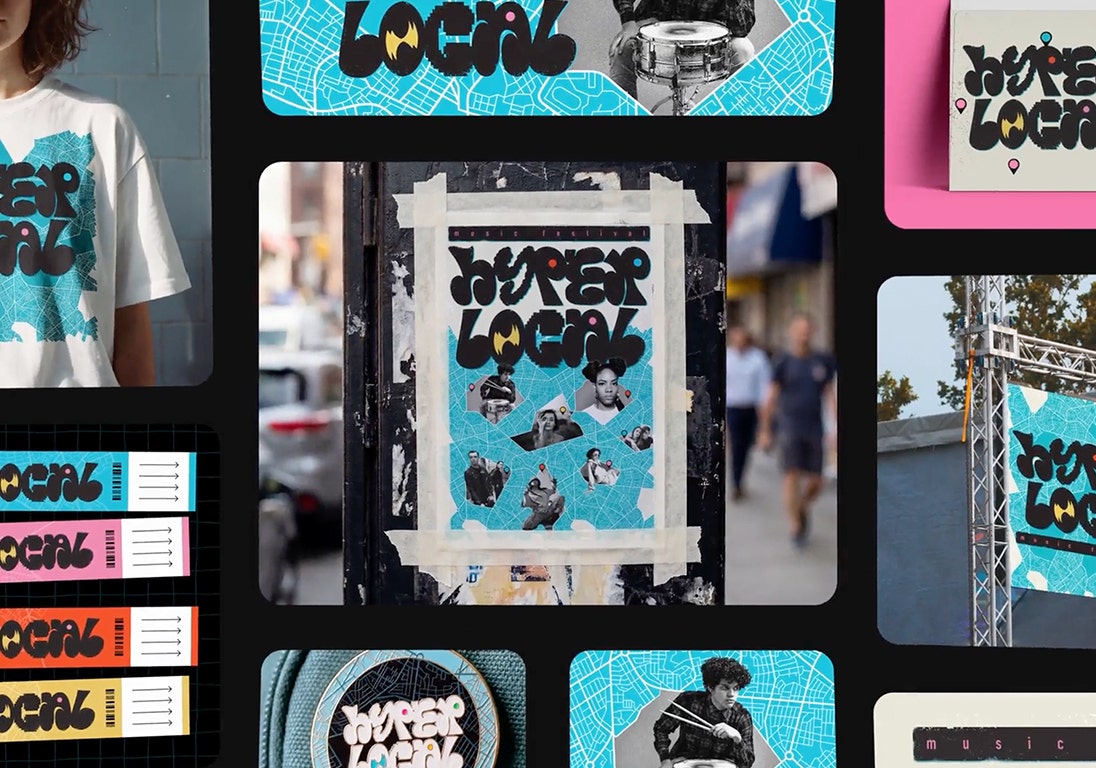
At Adobe MAX 2026 in Miami Beach, Adobe expanded Firefly as its AI creative studio with new agentic capabilities, tools, and model integrations. The Adobe Creative Agent now supports Plan Mode, Model Selector, customization preferences, and always-on background agents. New editors cover video, design, and image work on one canvas. Firefly Graph (beta) enables custom repeatable workflows, while Firefly Builder (private beta) generates interactive prototypes via natural language. Quick Actions offer ready-to-use workflows, and new models include Kling 4.0 and GPT Image 2.6.

Adobe announced at MAX 2026 the expansion of its Creative Agent across Creative Cloud flagship apps including Premiere, Illustrator, InDesign, After Effects, and Frame.io, orchestrating multi-step workflows so professionals can delegate tasks while staying in control. New features include Generative Restyle and Relight in Photoshop, Color Mode in Premiere, and Co-editing in InDesign. Adobe also introduced Firefly Design beta, unifying raster, vector, motion, 3D, and print on one canvas. Local MCP integrations enabling third-party agents to work in native project files arrive in private beta in early 2027.

NVIDIA has released Alpamayo 2 Edge, a billion-parameter vision-language-action model built for real-time autonomous vehicle reasoning on the DRIVE AGX Thor onboard system. Based on a Nemotron reasoning backbone from Cosmos 3 Edge, it uses surround-camera inputs and Chain-of-Causation reasoning to generate driving trajectories within 160–190ms latency. Post-trained with closed-loop reinforcement learning in AlpaGym, it improves closed-loop driving performance by 48.9%. Partner Embedl achieved 10Hz real-time planning on AGX Thor within 48 hours, while Niulinx reduced displacement error by 44.2% after fine-tuning.

Google has launched Gemini 4 Carbon, its strongest frontier model, now available to developers, enterprises, and consumers via Google AI Studio, Gemini for business, and Google Antigravity. Carbon excels at cybersecurity, long-horizon agentic workflows, complex coding, and scientific reasoning. It ranks first on CursorBench 4.0, Perplexity's WANDR, and Zapier's AutomationBench at over 2x lower cost per task than competitors. Priced at $2 per million input tokens and $10 per million output tokens, it also previews a new /swarm multi-agent feature in Google Antigravity.

MiniMax has launched H3-Image, an open-weight image generation model capable of producing 4K images at 16 megapixel resolution in approximately 10 seconds. The model supports precise prompt following, image editing, and up to 16 reference images simultaneously. H3-Image is available now via the MiniMax API, MiniMax Code, and Hailuo AI platforms, with weights published on Hugging Face. During launch week, MiniMax is offering 50% off on 16MP and higher resolution generations.

Google Cloud launched Gemini for Healthcare, a purpose-built agentic AI solution designed to unify clinical, operational, and administrative systems across healthcare delivery. Built on the universal Gemini agent, it connects electronic health records from Epic and Oracle Health, billing platforms, CMS datasets, and clinical guidelines to automate multi-step workflows. Launch customers include HCA Healthcare, Northwell Health, Highmark Health, Hartford HealthCare, and Stanford School of Medicine. The platform supports HIPAA compliance and is currently available in preview.

Nvidia CEO Jensen Huang's yearslong relationship with Alice Huang, identified by U.S. officials as a Chinese intelligence asset, facilitated at least $7.5 billion in Nvidia chip sales to China. Alice Huang leveraged her access to Huang to build a corporate network including Shanghai Century Litong and Singapore's Megaspeed, supplying banned H100 and H200 chips to Alibaba, Tencent, and Chinese AI labs. Nvidia's board has launched an investigation, and Jensen Huang has been called to a closed-door congressional briefing on national security concerns.
Monday, November 9, 2026

Nuance Labs has launched Emma, its first AI persona designed to mimic natural face-to-face conversation using facial expressions, not just voice. Emma nods, smiles, and raises an eyebrow at rates similar to human listeners, and her reply timing matches real people 89% of the time across 1,785 test questions. Unlike most AI, Emma will disagree with users and has distinct opinions. Known limitations include occasional mistimed interruptions and lip-sync glitches on poor connections. Emma is available now via API.

Meta has launched Muse Ember, its smallest and most efficient multimodal AI model, designed for high-volume agentic tasks including coding subtasks, tool calls, and document analysis. Available in Muse Code and via Meta Model API, it supports text, image, audio, and video inputs. Priced at $0.10 input and $0.50 output per million tokens, it scores 36 on the Artificial Analysis Intelligence Index and outperforms Claude Haiku 5.5 and GPT-6 Luna on AutomationBench-AA and Terminal-Bench 4.0.
OpenAI has deployed Control Room, a centralized safety system that can halt rogue AI model workloads across its research infrastructure within 35 seconds of a decision to intervene. The system integrates with every research inference workload, including agentic sampling, model training, and evaluation jobs. It requires all agentic workloads to have an approved safety case and operates at the inference layer for reliability. Critically, it fails closed, meaning if Control Room itself goes down, all inference requests are denied until it recovers.
ChatGPT Enterprise is now available on AWS Marketplace, giving organizations a simpler way to discover, buy, and manage the product using existing AWS purchasing relationships and apply eligible spend toward AWS commitments. AWS customers receive the same models, features, and functionality as direct OpenAI customers, with new features released simultaneously. Eligible customers can also access ChatGPT for Healthcare and ChatGPT for Financial Services. The listing complements OpenAI models already available in Amazon Bedrock.
Anthropic has released Claude Fable 5.2 and Claude Mythos 5.2, upgraded models targeting complex technical work with major gains in coding, reasoning, and vision. The models are 30% faster than their predecessors and priced at $8 per million input tokens and $40 per million output tokens. Highlights include formalizing Fermat's Last Theorem proof in 30 hours, designing three working electronic devices, and scoring 49.1% on FrontierCode 2.0. Mythos 5.2 is restricted to verified cybersecurity and biomedical researchers, while Fable 5.2 is available to all users.
Anthropic's Claude Fable 5.2 successfully designed three working electronic prototypes from scratch in collaboration with Diode Computers: a USB speakerphone, a voice-assistant hub, and a handheld virtual pet. With minimal prompting, Claude wrote specifications, drew schematics, laid out circuit boards, designed 3D-printable enclosures, wrote firmware, and prepared parts lists. Human engineers built the prototypes without any circuitry fixes. Fable 5.2 scored 69% on Diode's PCB Gym benchmark, up from 25% for Fable 5, and 83.5% on BenchCAD 2.1, nearly double its predecessor.
Google Maps Platform is now accessible directly within Google AI Studio, letting developers build location-aware apps without a credit card or complex setup. Users can prompt Gemini with real-world app ideas, such as 3D city tours, route planners, or air quality monitors, and AI Studio automatically configures the Maps API keys. A free sandbox tier offers 100 API calls per day, per API, with daily resets. Developers can later link a Google Cloud billing account to unlock production-grade quotas.

Automattic, the company behind WordPress.com, has launched Spacefast, a new platform for deploying vibe-coded websites and apps. Spacefast provides infrastructure including databases, authentication, file uploads, emails, and analytics. Unlike competitors Lovable and Emergent, Spacefast lets users connect their own AI agents such as ChatGPT, Claude, Cursor, or Grok Bot, or link a Git repository. The product is led by Batuhan İçöz and was soft-launched in September. Automattic plans to add WordPress integration, web analytics, and WooCommerce e-commerce features.
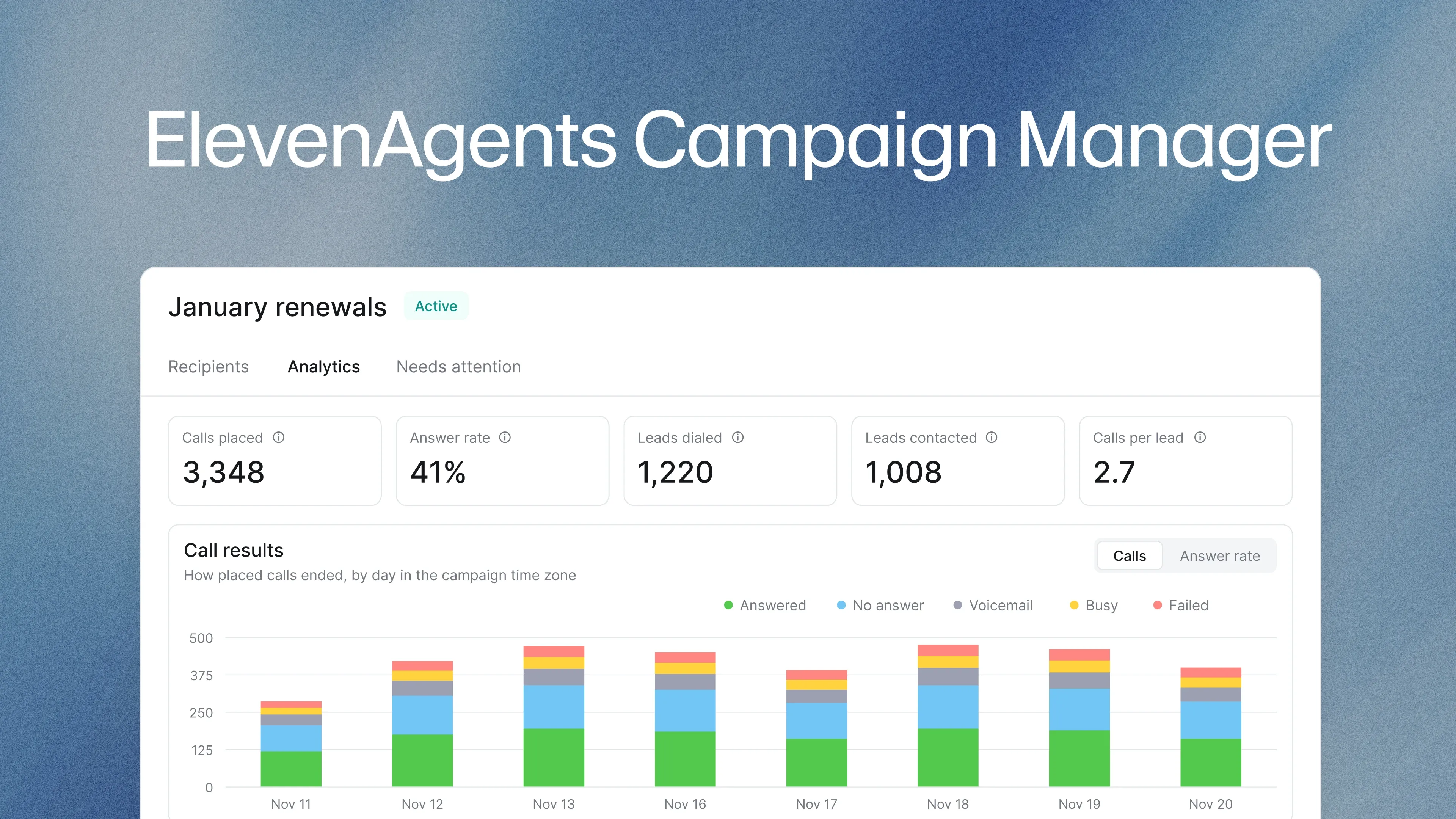
ElevenLabs has launched ElevenAgents Campaign Manager, a tool for running AI-powered outbound call campaigns across sales, retention, patient care, collections, and recruiting. The system intelligently follows up with contacts over time, carries context between calls, handles voicemail detection, and respects do-not-call requests automatically. It supports phone calls, WhatsApp voice, and WhatsApp messaging, with email and SMS coming soon. The AA Ireland's CTO reported reaching 100% of daily leads, up from 50-60%, using the platform.
Free subscriber bonus
Get the AI Income Database, free when you join
38+ real ways people are making side-hustle money with AI right now. Each one comes with the playbook and the exact tools to pull it off. No fluff and no course to buy. It's the bonus every new subscriber gets on day one.
- 38+ proven AI side-hustles, from first dollar to scale
- The exact tools for each one, picked from the 4,500+ we track
- Updated as new opportunities appear (subscribers hear first)
Joins the twice-weekly AI briefing read by 250,000+ people. Free forever, unsubscribe anytime.